

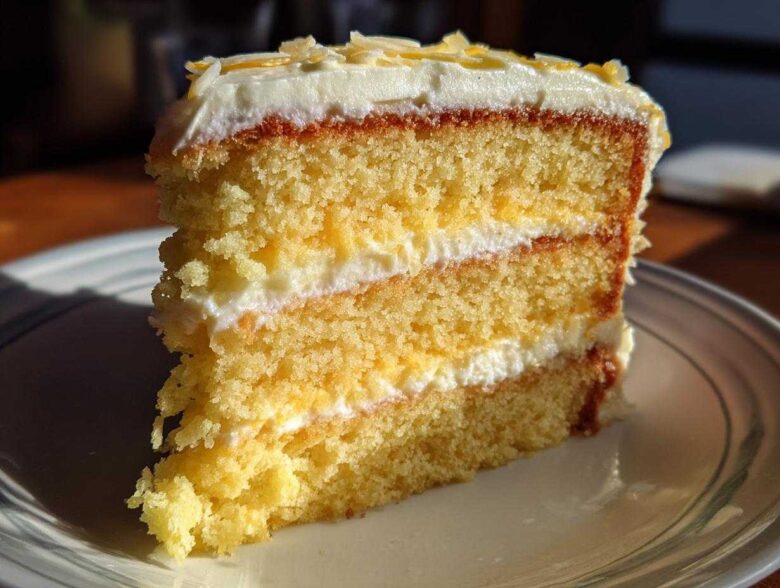
It took me ages—seriously, years of baking fails and crumbly messes—to finally crack the code on truly amazing allergy-friendly desserts. So many gluten-free recipes end up tasting like sweetened sand, which is just depressing! But wow, have I got a treat for you today. This Gluten-Free Lemon Coconut Cake is the real deal. We’re talking bright, zesty lemon cutting through rich coconut, all held together by a cake layer that manages to be incredibly moist and surprisingly light. I’m sharing every secret I learned over my many kitchen disasters to make sure your cake turns out absolutely perfect the first time. If you’ve been searching for the best gluten-free cake recipes, stop looking—you found it!
Why This Gluten-Free Lemon Coconut Cake Recipe Works (EEAT)
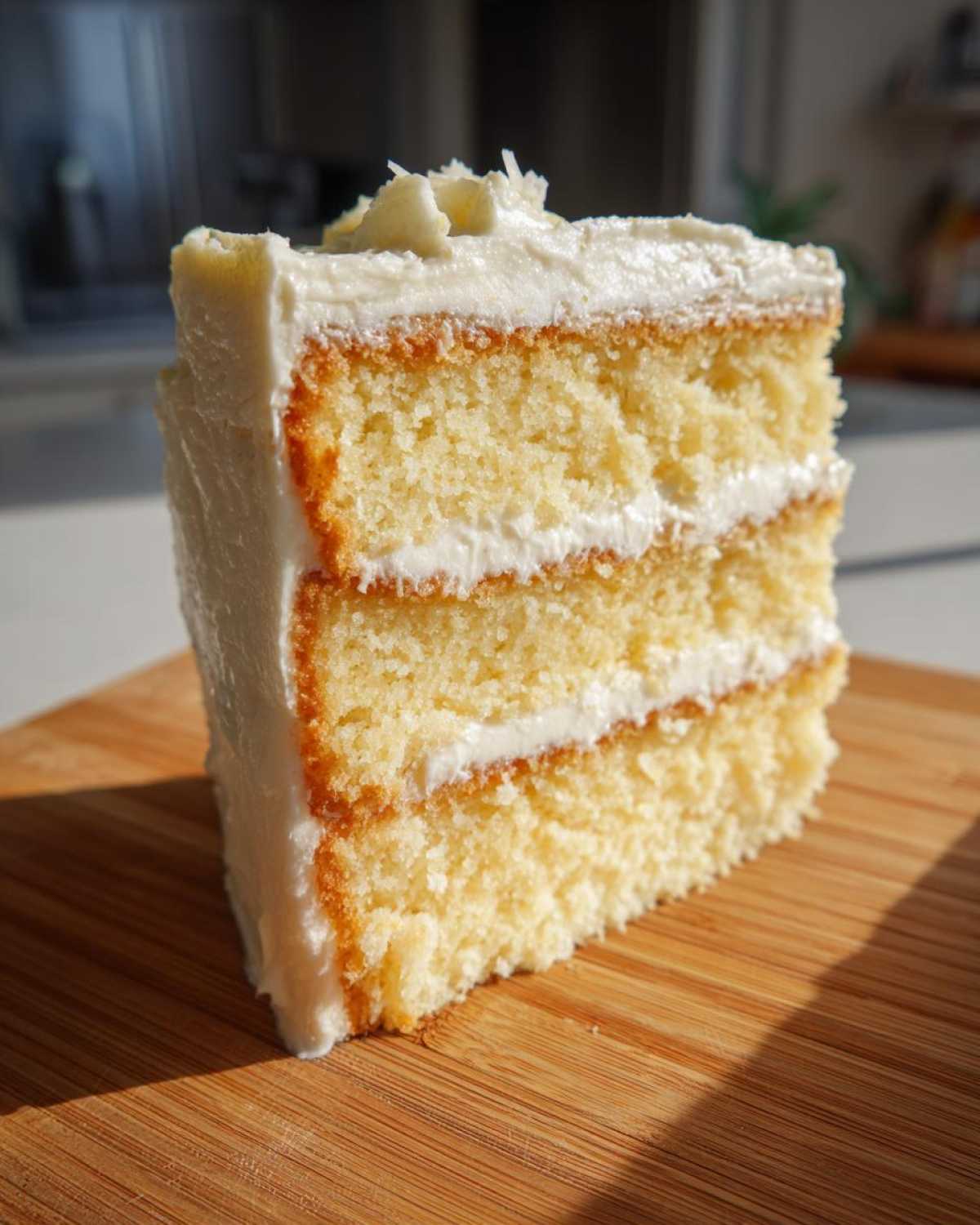
The secret weapon here is definitely the flour blend. Forget those gritty flour mixes; using almond flour gives us healthy fats right in the base, creating a tenderness that wheat flour just can’t touch. When paired with shredded coconut, the texture leans toward that coveted light and fluffy gluten free baking we all dream about.
It’s all about balance! The tartness of the fresh lemon isn’t just for flavor; it helps activate the little bit of baking powder we use, making sure this cake lifts beautifully without needing harsh gums. It’s a gentle process that results in a cake that sings.
Achieving Moisture in Gluten-Free Lemon Coconut Cake
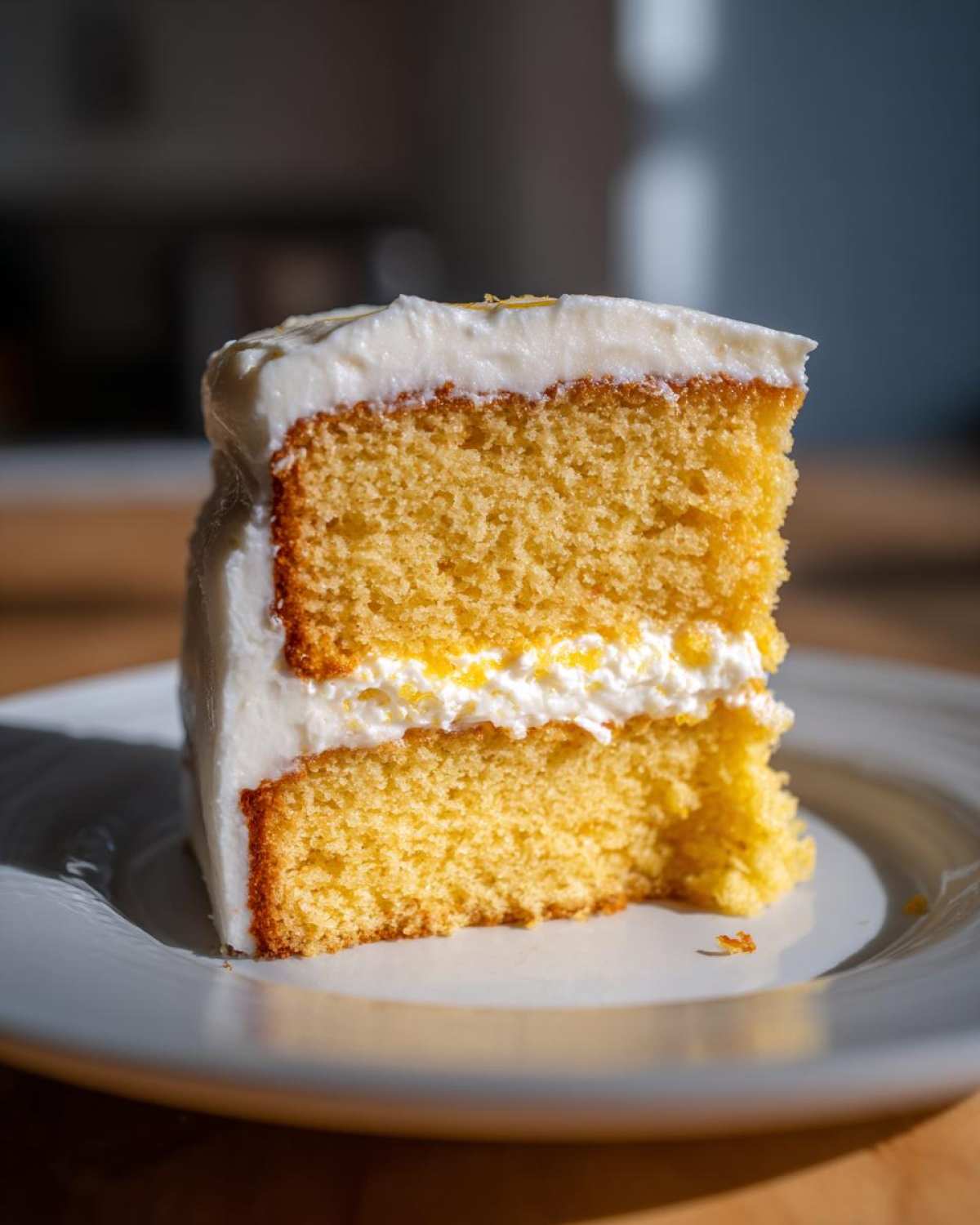
The biggest fear with gluten-free anything is dryness, right? Not here! I rely heavily on good fats to keep everything tender. We’re using softened butter, yes, but the real hero is the full-fat coconut milk in the batter. That milk locks in hydration while the cake bakes, ensuring every slice stays moist for days. Trust me, that richness keeps the crumb from ever feeling crumbly or dry—that’s baking for people who love rich food!
Essential Ingredients for Your Gluten-Free Lemon Coconut Cake
Getting the ingredients right is where the magic starts for this tropical treat. Since we aren’t relying on traditional wheat flour, every other component has to pull its weight to deliver amazing flavor and structure. If you’re new to baking with almond flour and coconut, pay close attention to the prep notes here—they matter hugely for the final texture!
Cake Batter Components
For the cake itself, you absolutely need 1 3/4 cups of almond flour; it gives us that wonderful tender crumb. We’re using 1/2 cup of unsweetened shredded coconut mixed right into the batter, along with 1 1/2 teaspoons of baking powder and just a pinch of salt for balance. For the wet side, make sure you have 1 cup of granulated sugar, 1/2 cup of unsalted butter that’s completely softened to room temperature, and 3 large eggs. Don’t forget 1 teaspoon of vanilla extract, 1/2 cup of full-fat coconut milk—that’s important for richness!—and for that zesty punch, you need 1/4 cup of fresh lemon juice paired with 2 tablespoons of finely grated lemon zest.
Coconut Cream Cheese Frosting Ingredients
Now for the topping! This creamy frosting is so much better than a simple glaze. You’ll start with 4 ounces of cream cheese, softened, and 1 cup of powdered sugar for sweetness. We’re bringing the coconut flavor in again with 1/4 cup of unsweetened shredded coconut for texture in the frosting. I also keep a little extra coconut milk nearby, maybe a tablespoon or two, just in case we need to thin the mix out perfectly while beating it.
Step-by-Step Instructions for the Gluten-Free Lemon Coconut Cake
Okay, let’s get baking! If you follow these steps closely, I promise you’ll end up with those gorgeous, bakery-style lemon coconut cake layers. The key here is not rushing, especially when mixing the wet and dry parts together. Since we’re aiming for a flavorful gluten-free coconut cake, precision pays off!
Preparing the Cake Layers
First things first—get that oven cranked up to 350°F (175°C). While it heats, grease your two 8-inch round pans and line the bottoms perfectly with parchment paper. Now, whisk together all your dry stuff in one bowl: the almond flour, the 1/2 cup of shredded coconut, baking powder, and salt. In a separate, bigger bowl, start creaming the softened butter and sugar until it looks nice and fluffy—this is key for air! Then beat in your eggs one at a time, followed by the vanilla extract. In a small dish, quickly combine the coconut milk, fresh lemon juice, and that gorgeous zest. Now, for the crucial alternating step: add about a third of your dry mix, mix gently, then pour in half of the coconut milk mixture. Keep going, alternating dry and wet, always starting and finishing with the dry ingredients. Stop mixing the second it all comes together; no overworking the batter!
Baking and Cooling Protocol
Divide that beautiful batter evenly between your prepared pans. Slide them into the oven and let them bake for about 28 to 32 minutes. You know they’re done when a toothpick sticks right in the center and comes out clean with just moist crumbs attached. Don’t yank them out immediately! Let them relax in those pans for a good 10 minutes first. After that little rest, gently flip them out onto a cooling rack. They must be completely, totally cool before you even think about frosting them—warm cake melts cream cheese frosting beautifully, but not in a good way!
Making the Coconut Cream Cheese Frosting
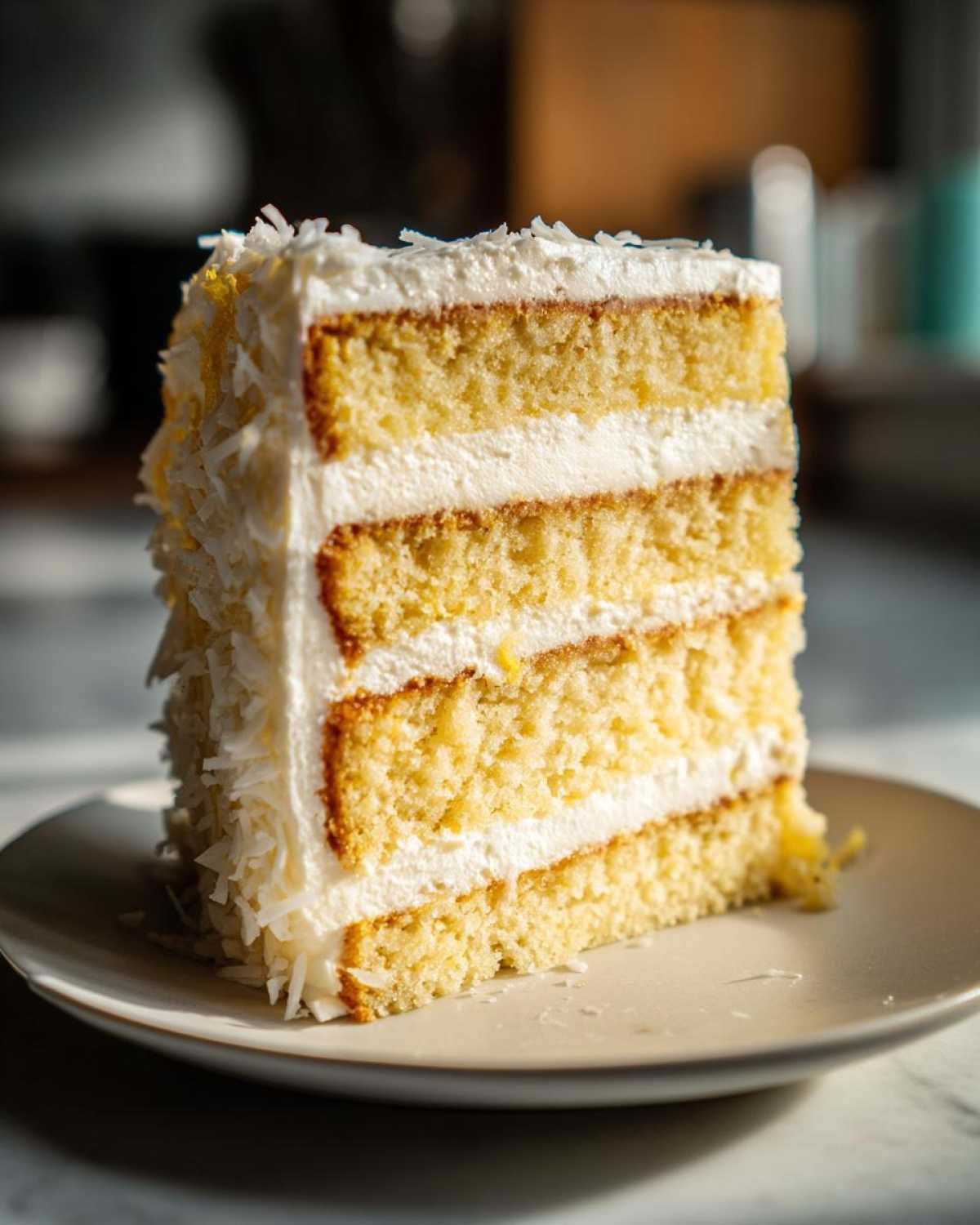
While those layers cool down, let’s make the frosting. Get your softened cream cheese beating until it’s silky smooth and lump-free. Slowly add in the powdered sugar until it’s incorporated. Now, beat in the remaining 1/4 cup of shredded coconut. If your frosting looks too stiff to spread easily, just stir in a teaspoon of extra coconut milk at a time until it’s the perfect, thick, glossy consistency. Don’t add too much liquid, or it’ll turn runny!
Tips for the Best Gluten-Free Lemon Coconut Cake Texture
Listen, perfecting gluten-free baking comes down to respecting your ingredients, especially when we’re working with almond flour! The biggest mistake people make is using cold butter or eggs. If your butter isn’t truly softened, you won’t create those tiny air pockets during creaming, and your cake will bake up dense, not light.
When you mix the batter, remember what I said earlier: stop as soon as the streaks disappear! Overmixing gluten-free flour is dangerous because it settles and compacts, defeating the purpose of using those lovely ingredients. If you have to substitute some almond flour—maybe because you ran low—you can use up to 1/4 cup of a good GF all-purpose blend that contains xanthan gum. It helps hold everything together beautifully! That combination of room-temperature ingredients and gentle mixing is what gives you that amazing, fluffy crumb we’re aiming for.
Variations for Your Zesty Lemon Desserts Gluten Free
I love that this cake is so versatile! Even though this Gluten-Free Lemon Coconut Cake is fantastic as is, sometimes you feel like a little change, right? This recipe is truly a foundation for amazing tropical gluten free cake ideas. Don’t be afraid to make it your own!
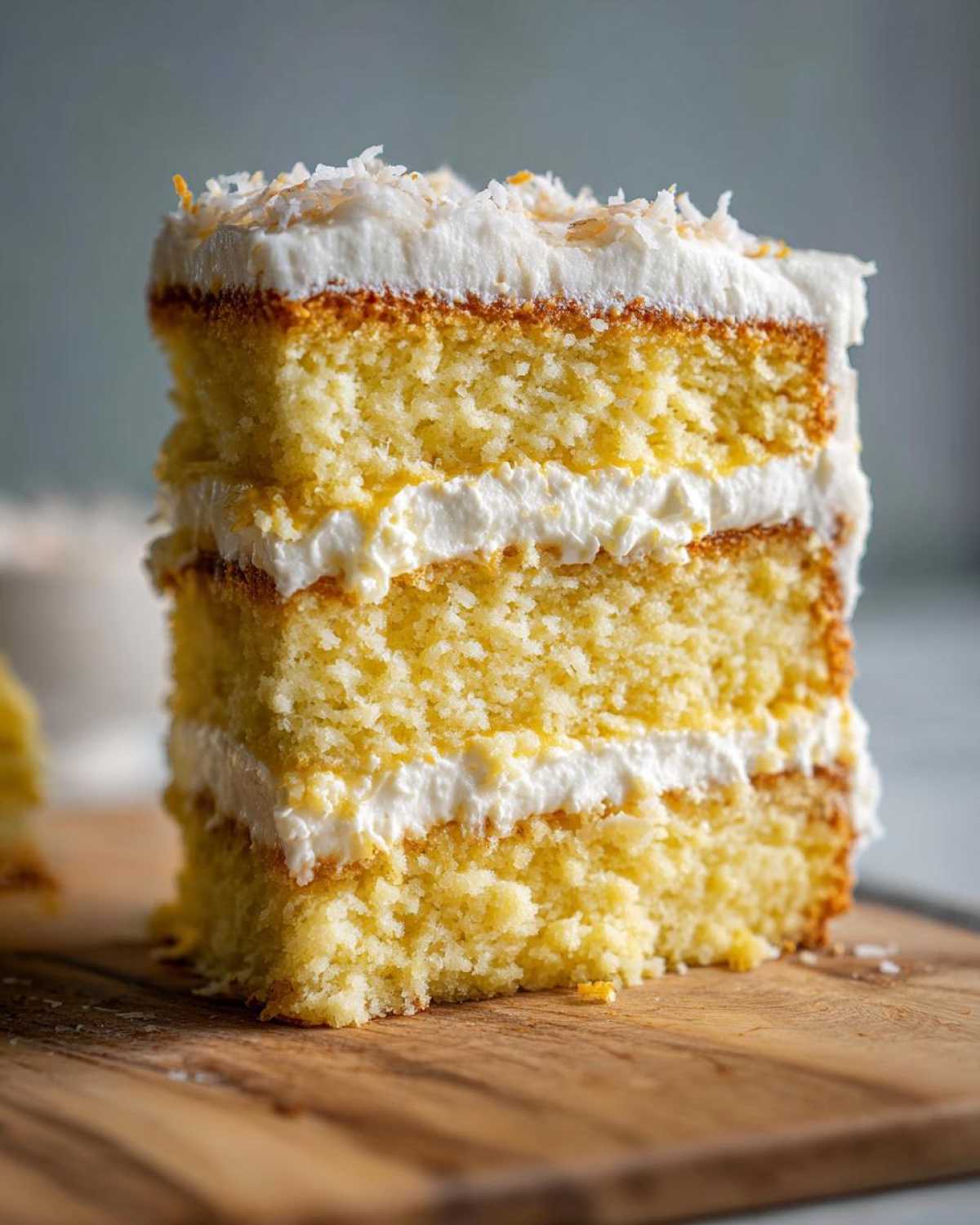
If you want a bigger textural pop in the cake layers themselves, try toasting about a half cup of your shredded coconut before you fold it into the batter. Toasting it lightly beforehand brings out such a deeper, nuttier flavor! Just spread it on a sheet pan and pop it in the same oven while it’s preheating, keeping a close eye on it so it doesn’t scorch. It adds an amazing crunch.
Another fun swap? If you’re feeling more of a lime vibe one day, you can trade out the lemon juice and zest for fresh lime juice and zest at a 1:1 ratio. Lemon-Lime Coconut Cake sounds just as heavenly to me!
Simple Lemon Glaze Alternative
If you’re making this cake for a casual afternoon snack or maybe you just don’t want the richness of the cream cheese frosting, I have the perfect solution: a super simple, tangy lemon glaze. It keeps the cake lighter and ready to eat faster!
You literally just need 1 cup of powdered sugar mixed vigorously with about 2 tablespoons of fresh lemon juice. You’re looking for a thick, drippy consistency. If it seems too stiff, add another half teaspoon of juice until it flows nicely off your whisk. Drizzle that right over the completely cooled cake layers—or even over a single loaf if you bake it that way—and let it set up. It sets quickly and gives you that sharp, zesty hit without all the fuss of the full frosting!
Storage and Make Ahead Tips for Gluten-Free Lemon Coconut Cake
One thing I love about this recipe is how well it travels and stores. If you’re planning ahead—which is smart for any big gathering—you can totally bake the unfrosted layers ahead of time and keep them tucked away. Just let them cool completely, wrap each layer tightly in plastic wrap, and they can hang out in the freezer for weeks! That flexibility makes it a wonderful make ahead gluten free birthday cake.
Once the cake is frosted, it stays remarkably good at room temperature for about a day because that frosting helps seal in moisture. After that, I always pop it into an airtight container in the fridge. When you want to serve it, take it out about 30 minutes beforehand so the cream cheese frosting can soften up just a tiny bit, making it easier to slice!
Frequently Asked Questions About This Gluten-Free Lemon Coconut Cake
I’ve gathered up some of the questions I get most often about making this recipe perfect. You shouldn’t have any trouble, but sometimes little things trip people up, especially when shifting to gluten-free baking!
Can I make this Gluten-Free Lemon Coconut Cake Dairy-Free?
That’s a great question, especially since we rely on both butter and cream cheese for that incredible frosting texture! Yes, you absolutely can make this a truly dairy free lemon coconut recipe. For the cake batter, swap the unsalted butter for a high-quality vegan butter stick; they measure and cream almost identically. For the frosting, use a good, stiff dairy-free cream cheese substitute. Just chill the dairy-free cream cheese very slightly before beating it, as they can sometimes be softer than traditional dairy versions. It comes out just as zesty and delicious!
What is the Easiest Gluten Free Lemon Cake variation?
If you are short on time, the easiest way to make this recipe zip along is by skipping the whole coconut cream cheese frosting procedure. That’s where most of the time goes! Instead, aim for my Simple Lemon Glaze Alternative. You just whisk powdered sugar with lemon juice until it drizzles nicely. That simple glaze hardens quickly and gives you that intense, zesty flavor right on top. It’s truly the quickest path to serving up an amazing zesty lemon dessert!
Why do I need full-fat coconut milk instead of light?
When it comes to making a truly moist gluten-free cake, fat is your friend! Light coconut milk is really watery, and if you use that, you’ll mess up the dry-to-wet ingredient ratio we worked so hard to perfect when combining those almond flour bases. The fat in the full-fat version gives this Gluten-Free Lemon Coconut Cake the tenderness and richness it needs to compete with any regular cake. Don’t skimp here; it’s what keeps this dessert firmly in the category of moist gluten free coconut desserts!
Can I use coconut flour instead of almond flour?
Oh, I wouldn’t recommend that swap for these layers! Coconut flour is like a dry, thirsty sponge—it absorbs way too much liquid. If you tried to use coconut flour 1:1 where almond flour goes, you would end up with rock-hard little discs instead of cake! We specifically use almond flour for its high-fat content and fine grain. If you want to add *more* coconut, stick to adding more shredded coconut, or perhaps check out my post on finding the best gluten free cake recipes to see how others combine different flours!
How do I make sure my cake layers are perfectly flat?
Nobody likes a dome in the middle of their layer cake, especially when you’re stacking! To get really flat tops, I use my old method: either use baking strips wrapped around the outside of the pan dipped in water, or, if you don’t have those, slightly overfill the pan and immediately level the batter with an offset spatula. The secret trick, though, is to bake it at 325°F (160°C) for a few minutes longer instead of the full 350°F. Lower heat bakes more evenly from edge to center, which helps prevent that doming effect dramatically.
Estimated Nutritional Data for Gluten-Free Lemon Coconut Cake
I always feel a little nervous sharing the nutrition facts because, let’s be honest, this is a treat, not health food! But I know many of you track your macros or are curious, so here is the estimated breakdown for a single slice based on the recipe as written, including the rich coconut cream cheese frosting.
Please remember, these numbers are just educated guesses based on standard ingredient databases. If you swap out the butter for coconut oil or use a different brand of almond flour, the final totals will shift a bit. I always treat these estimates as a general guide rather than gospel!
- Serving Size: 1 slice
- Calories: 380
- Fat: 24g
- Saturated Fat: 10g
- Trans Fat: 0g
- Carbohydrates: 38g
- Fiber: 2g
- Sugar: 35g
- Protein: 8g
- Cholesterol: 75mg
- Sodium: 180mg
Whew! It’s definitely decadent, which is what you want in a celebratory cake, especially when you’re missing out on traditional wheat flour. Enjoy every bite of that zesty goodness!
Share Your Gluten-Free Baking Results
Well, that’s it—the entire recipe for what I truly believe is the ultimate Gluten-Free Lemon Coconut Cake! I’ve shared all my notes, all the little secrets my kitchen has revealed over the years, and now it’s your turn to get those pans messy.
I am so eager to hear how this turned out for you. Did the coconut cream cheese frosting set up perfectly? Did your layers come out as light and fluffy as mine did? Don’t be shy!
I really want to know how you liked it, so please, take a moment and drop a rating for the recipe right here in the comments section below—I always aim for five stars, naturally! Tell me what you thought; your feedback helps me know which recipes to perfect next for the blog.
If you snapped a picture of your beautiful tropical layers, please share it! Tag me on social media so I can see your amazing work. It seriously makes my day when I see you enjoying these recipes that took me so long to perfect. Happy baking, and don’t forget to check out what else is new over on the main blog page for more allergy-friendly fun!
PrintGluten-Free Lemon Coconut Layer Cake
A moist, zesty layer cake using almond flour and coconut, topped with a creamy coconut cream cheese frosting.
- Prep Time: 20 min
- Cook Time: 30 min
- Total Time: 50 min
- Yield: 10 servings
- Category: Dessert
- Method: Baking
- Cuisine: American
- Diet: Gluten Free
Ingredients
- 1 3/4 cups almond flour
- 1/2 cup unsweetened shredded coconut
- 1 1/2 teaspoons baking powder
- 1/2 teaspoon salt
- 1 cup granulated sugar
- 1/2 cup unsalted butter, softened
- 3 large eggs
- 1 teaspoon vanilla extract
- 1/2 cup full-fat coconut milk
- 1/4 cup fresh lemon juice
- 2 tablespoons lemon zest
- 1 cup powdered sugar (for frosting)
- 4 ounces cream cheese, softened (for frosting)
- 1/4 cup unsweetened shredded coconut (for frosting)
Instructions
- Preheat your oven to 350°F (175°C). Grease and line two 8-inch round cake pans with parchment paper.
- In a medium bowl, whisk together the almond flour, shredded coconut, baking powder, and salt. Set aside.
- In a large bowl, cream the softened butter and sugar together until light and fluffy.
- Beat in the eggs one at a time, mixing well after each addition. Stir in the vanilla extract.
- In a small bowl, whisk together the coconut milk, lemon juice, and lemon zest.
- Gradually add the dry ingredients to the wet ingredients, alternating with the coconut milk mixture, beginning and ending with the dry ingredients. Mix until just combined. Do not overmix.
- Divide the batter evenly between the prepared cake pans.
- Bake for 28 to 32 minutes, or until a toothpick inserted into the center comes out clean.
- Let the cakes cool in the pans for 10 minutes before inverting them onto a wire rack to cool completely.
- To make the frosting, beat the softened cream cheese until smooth. Gradually beat in the powdered sugar until combined.
- Beat in the 1/4 cup of shredded coconut and 1 tablespoon of coconut milk until the frosting is smooth and spreadable. Add more coconut milk, one teaspoon at a time, if the frosting is too stiff.
- Once the cakes are completely cool, frost and stack the layers. Garnish the top with extra shredded coconut, if desired.
Notes
- For a lighter texture, you can substitute 1/4 cup of the almond flour with a gluten-free all-purpose blend that contains xanthan gum.
- You can make a simple lemon glaze instead of cream cheese frosting by mixing 1 cup powdered sugar with 2 tablespoons lemon juice.
- This cake freezes well once cooled and before frosting. Wrap tightly in plastic wrap.
Nutrition
- Serving Size: 1 slice
- Calories: 380
- Sugar: 35
- Sodium: 180
- Fat: 24
- Saturated Fat: 10
- Unsaturated Fat: 14
- Trans Fat: 0
- Carbohydrates: 38
- Fiber: 2
- Protein: 8
- Cholesterol: 75