

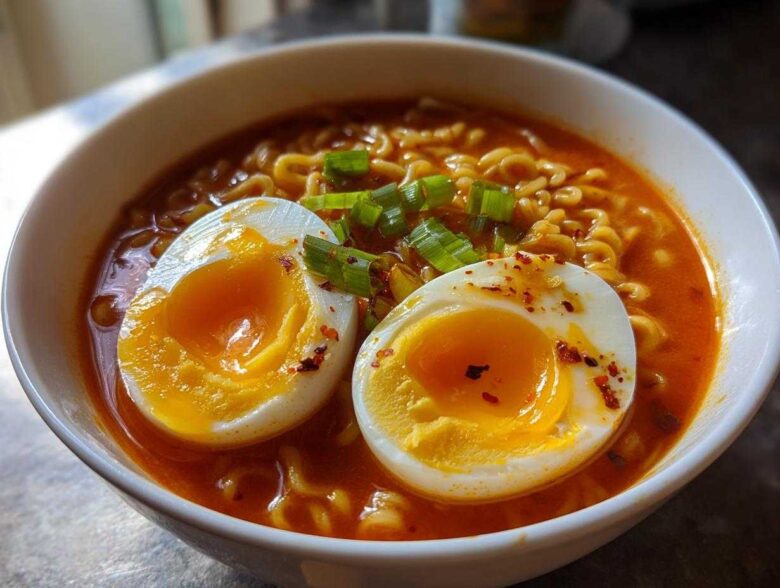
There is absolutely nothing on earth that hits the soul quite like a steaming, deeply flavorful bowl of ramen made right in your own kitchen. Forget those sad packets from college! We’re talking deep, savory, restaurant-quality comfort here. After years of trying to replicate my favorite hole-in-the-wall shop’s bowl, I finally cracked the code for the ultimate **Spicy Miso Ramen with Soft-Boiled Eggs**. Seriously, this recipe delivers that signature spicy kick balanced by unbelievable umami, topped off with those perfectly jammy, seasoned Ajitama eggs.
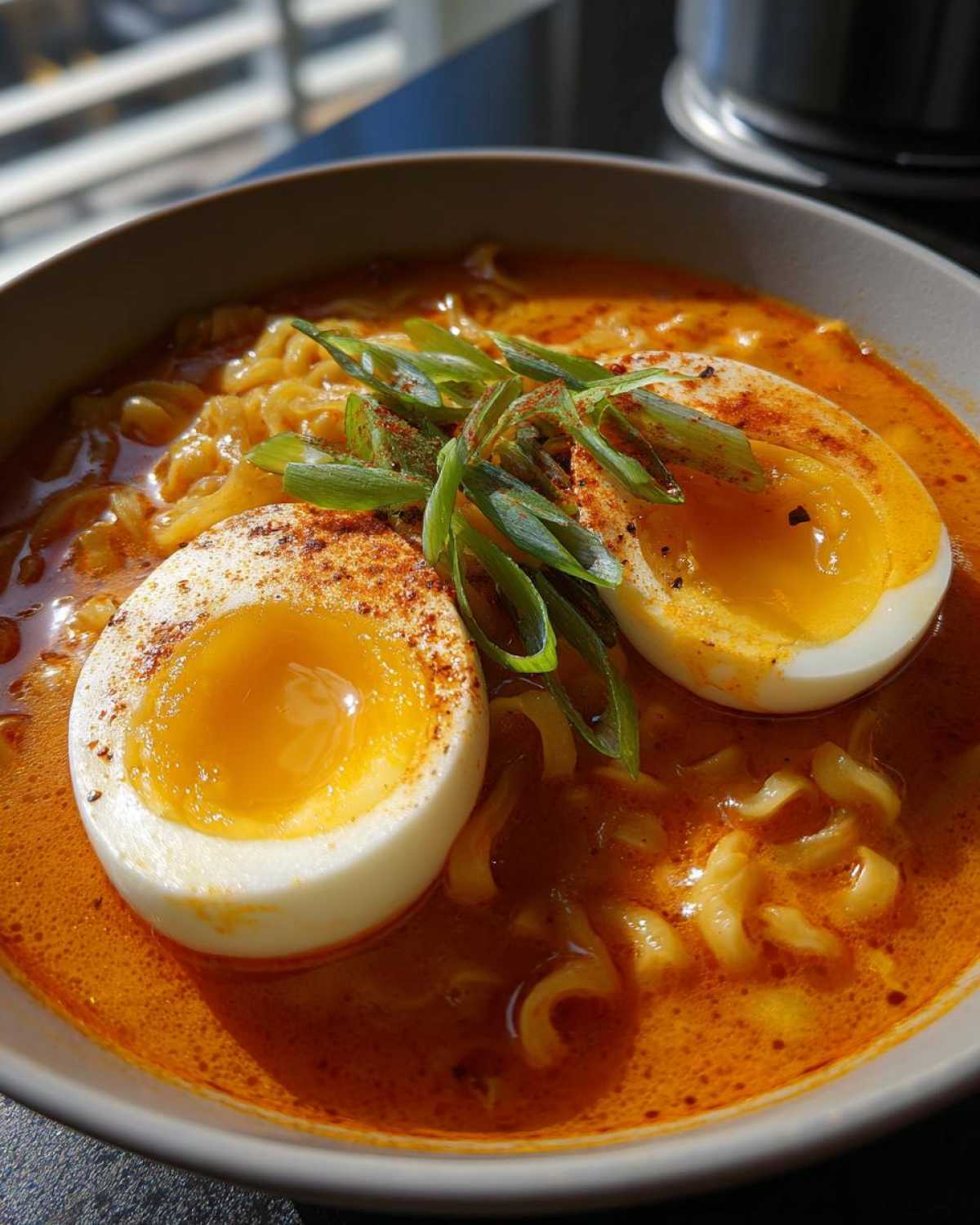
It tastes complex, yes, but trust me, the process is totally manageable for a home cook looking for a project dinner. We’ll get that broth rich and that egg yolk runny—it’s the absolute best way to warm up on a chilly evening. You’re going to love how easy it is to sneak in some veggies and make this your own comfort food staple. If you’re looking for amazing dinner ideas, stick around; you can see more of my favorites over in the dinner category!
Why This Spicy Miso Ramen with Soft-Boiled Eggs Recipe Works (E-E-A-T)
The secret to making this ramen taste like it came straight out of a bustling Tokyo shop is really about technique, not just ingredients. We don’t just dump everything in—we build layers! Experts know that blooming the chili paste—cooking it briefly in oil—wakes up that spice and deepens the flavor tremendously. That’s the heat foundation!
The quality of the miso is key too. We use two types for the best results. Following these exact steps for the **Spicy Miso Ramen with Soft-Boiled Eggs** ensures that amazing depth you are looking for every single time.
Flavor Profile Breakdown: Heat Meets Umami
We’re balancing big flavors here. The heat comes from the chili bean paste, which cooks out any raw edge. Then, the combination of red and white miso delivers that complex, salty, fermented umami punch. It’s savory, it pops, and it clings perfectly to those noodles. Wow, it’s good!
Essential Ingredients for Spicy Miso Ramen with Soft-Boiled Eggs
Okay, let’s talk gear. You can’t make magic without the right tools, and for authentic flavor in this **Spicy Miso Ramen with Soft-Boiled Eggs**, quality counts! Don’t feel overwhelmed by the list; once you have the miso and the chili paste stocked, this comes together super fast. I always keep extra mirin around because it’s such a powerhouse in Japanese cooking, kind of like how you need a good base if you’re making something complex like caramelized onions.
The key here is precision, especially when we prepare those eggs. Measure out your marinade components exactly—that’s what gives the Ajitama that beautiful, deep amber color and salty-sweetness without overwhelming the yolk.
For the Perfect Ajitsuke Soft Boiled Eggs for Ramen
These are non-negotiable, you guys! We need four large eggs, ready for their bath. For the marinade, you’ll need exactly 1/4 cup of regular soy sauce, 1/4 cup of sweet mirin, and 1 cup of water. That’s your soaking solution. Make sure your soy sauce and mirin are fresh; you want that clean flavor since the eggs are sitting in it for so long!
Building the Spicy Miso Broth Base
For the broth, start with at least 1 quart of good quality chicken or vegetable stock—don’t skimp here! For the miso, grab 4 tablespoons of robust red miso paste and 2 tablespoons of milder white miso paste. That blend is perfect. Then, the heat factor: 1 to 2 tablespoons of chili bean paste, usually called Tobanjan, or you can use Gochujang if that’s easier to find.
Aromatics are next: 1 teaspoon of fresh grated ginger and 2 minced cloves of garlic. Finally, season it up with 1 tablespoon of regular soy sauce, 1 tablespoon of mirin, and 1 teaspoon of sesame oil. That’s the flavor bomb right there.
Step-by-Step Instructions for Spicy Miso Ramen with Soft-Boiled Eggs
Alright, deep breath! This is where the magic happens, and I promise you, sticking to these steps is the key to getting restaurant-quality results in your **Spicy Miso Ramen with Soft-Boiled Eggs**. We start with the eggs because they need time to soak up all that glorious flavor—patience pays off here!
Mastering the Soft Boiled Eggs for Ramen
First things first: your eggs! Bring a small pot of water to a full, rolling boil—this consistency is important. Gently lower your four large eggs right into that bubbling turmoil. Now, set a timer for exactly **6 minutes and 30 seconds**. That timing is the sweet spot for that perfect, gooey, runny yolk we all crave. The second that alarm goes off, plunge those eggs straight into a big ice bath to halt the cooking immediately. Once they are totally cool, peel them super carefully—they are delicate! For the marinade, combine the soy sauce, mirin, and water in a small container. Place those peeled eggs in the marinade, making sure they are completely swimming in the liquid. Pop them in the fridge for four hours minimum, but honestly, letting them sit overnight gives you the best Ajitama experience.
Creating the Flavorful Spicy Miso Ramen Broth
Now for the broth, which you can whip up while the eggs are chilling. Grab a medium saucepan and get your sesame oil warm over medium heat. Toss in your minced garlic and grated ginger—don’t let them burn, just sizzle until they smell amazing, about 30 seconds. Next, stir in your chili bean paste. Cooking that paste for a minute is crucial; it deepens the spice profile! Pour in your stock and bring that whole mixture up to a gentle simmer.
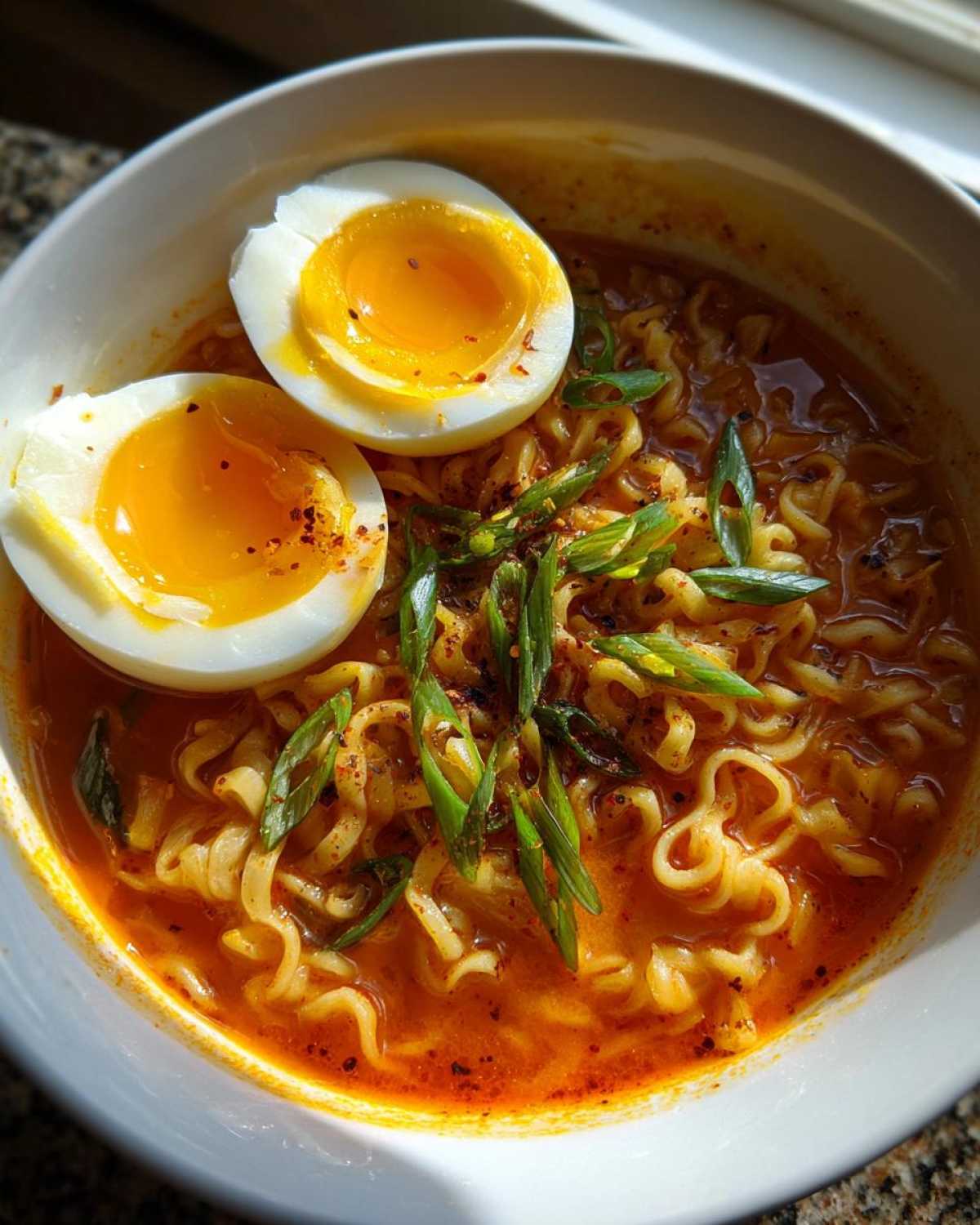
Here’s the crucial pro move: mix your red and white miso pastes, the soy sauce, and the mirin in a separate little bowl. Whisk in about half a cup of the hot broth until it’s a completely smooth slurry—this prevents those annoying miso clumps! Pour that smooth, savory goodness back into the saucepan. Here’s the rule: **Do not let the broth boil after the miso goes in!** Just keep it warm. Taste it—if you want more heat, add a drop of chili oil, or maybe a dash of salt, but be gentle. If you’re curious about making a great side sauce, I have a fantastic garlic butter recipe you might like!
Noodle Cooking and Final Assembly
Time for the noodles! Cook your fresh ramen noodles according to the package—usually just a couple of minutes—until they are perfectly al dente. Drain them really, really well and divide them evenly into your four big bowls. Ladle that piping hot, aromatic **Spicy Miso Ramen** broth right over the top of those noodles. Now, take your marinated eggs, slice them right down the middle so you can see that gorgeous yolk, and place two halves gently on top of each serving. Finish it off with your toppings like sliced green onions and corn. That’s it! You did it!
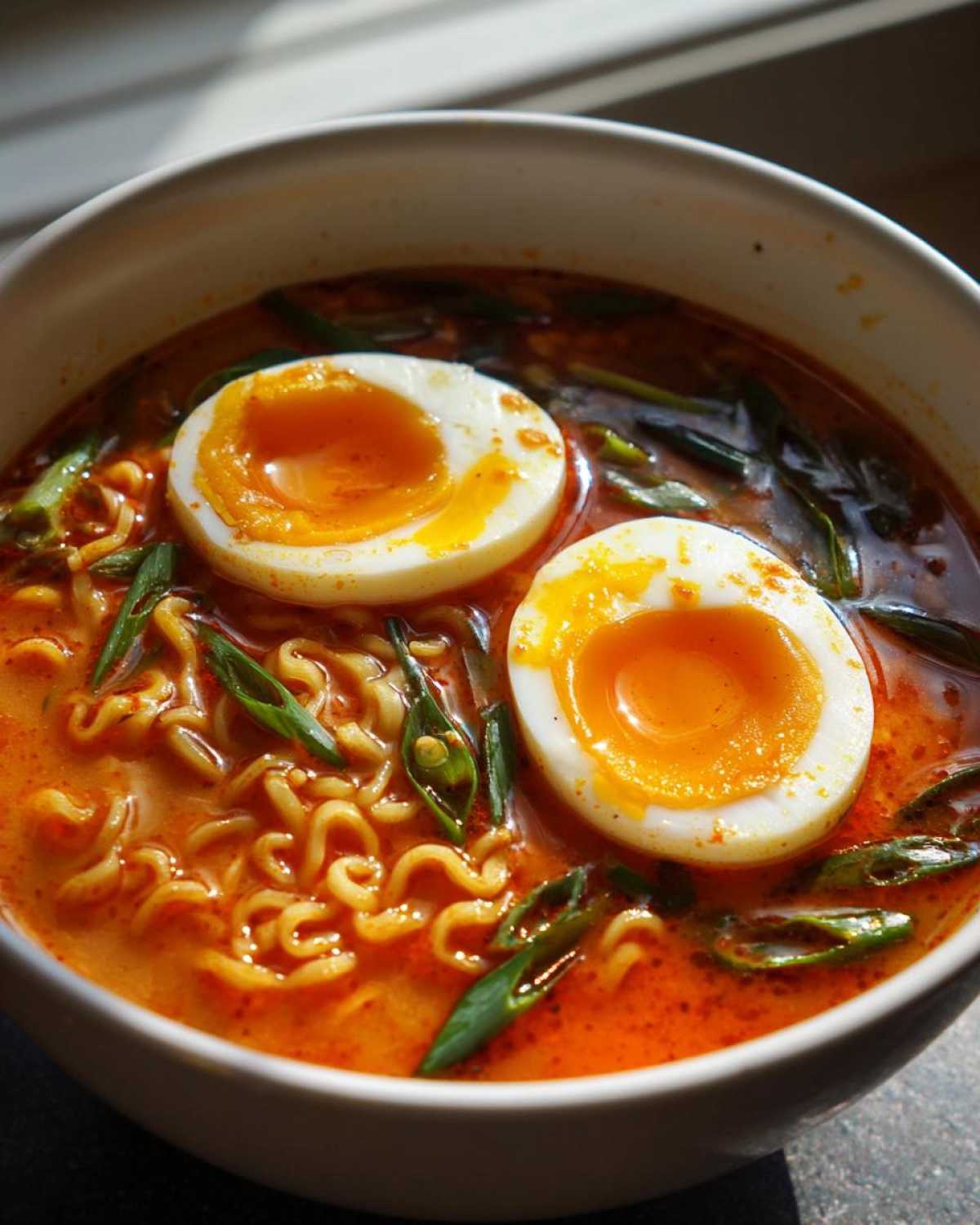
Tips for Restaurant Quality Spicy Miso Ramen with Soft-Boiled Eggs at Home
You’ve built the whole bowl, but if you walk away now, you might miss the little secrets that elevate this from ‘good’ to ‘I need to open a shop’ level. Honestly, the difference between a decent bowl and a spectacular one always comes down to respecting the main players: the miso and the heat source.
First, remember that rule about not boiling the miso? That’s huge for retaining flavor. Miso is a fermented product, and if you boil it hard, you kill all those wonderful, complex, living flavors it brings to your **Spicy Miso Ramen with Soft-Boiled Eggs**. You’re just warming it through gently—that’s why tempering it with a little hot broth first is so essential. It keeps the slurry smooth and prevents any shocking flavor loss when it hits the main pot.
Also, let’s talk quality. If you can swing it, try to buy miso from a place that specializes in Asian ingredients, rather than just the pale stuff sitting on a main grocery shelf. Red miso, which we use for depth, should smell earthy and strong. If you find a great homemade teriyaki recipe, you know exactly how much a good homemade sauce beats jarred stuff—it’s the same principle here! A truly rich stock, even if it’s just a quick homemade version, will always beat plain water plus bouillon cube when making this teriyaki-level flavor base for your ramen.
Finally, the chili paste! If you use Tobanjan, you’re already on the right track for authentic heat. But here’s my personal touch: if you want that oily sheen on top that looks so professional, make a tiny batch of chili oil separately. Just heat some neutral oil until it shimmers, pour it over a tablespoon of red pepper flakes, and let it infuse. A teaspoon of that on top of your finished **Spicy Miso Ramen with Soft-Boiled Eggs** seals the deal. It adds richness and visual appeal!
Best Ramen Toppings for Spicy Miso Ramen with Soft-Boiled Eggs
Okay, we’ve got the broth humming and those gorgeous, jammy eggs ready to go. But a bowl of ramen isn’t complete until you dress it up! Toppings are where you really get to personalize your **Spicy Miso Ramen with Soft-Boiled Eggs**, adding texture, freshness, and often, more satisfying bites.
We already have the basics outlined: plenty of sliced green onions for a sharp bite, crisp strips of nori seaweed to dissolve slowly into the broth, and maybe some sweet corn kernels to balance the heat. If you chose to cook ground pork, that savory meat is definitely the star add-in!
But if you want to take this bowl to the next level—to that restaurant-quality status—you absolutely need to try a couple of these additions. They just work so perfectly with the rich, spicy miso flavor profile. Think about texture contrast! If you’re looking for more snack ideas that have that nice chewy quality, check out my recipe for homemade granola bars!
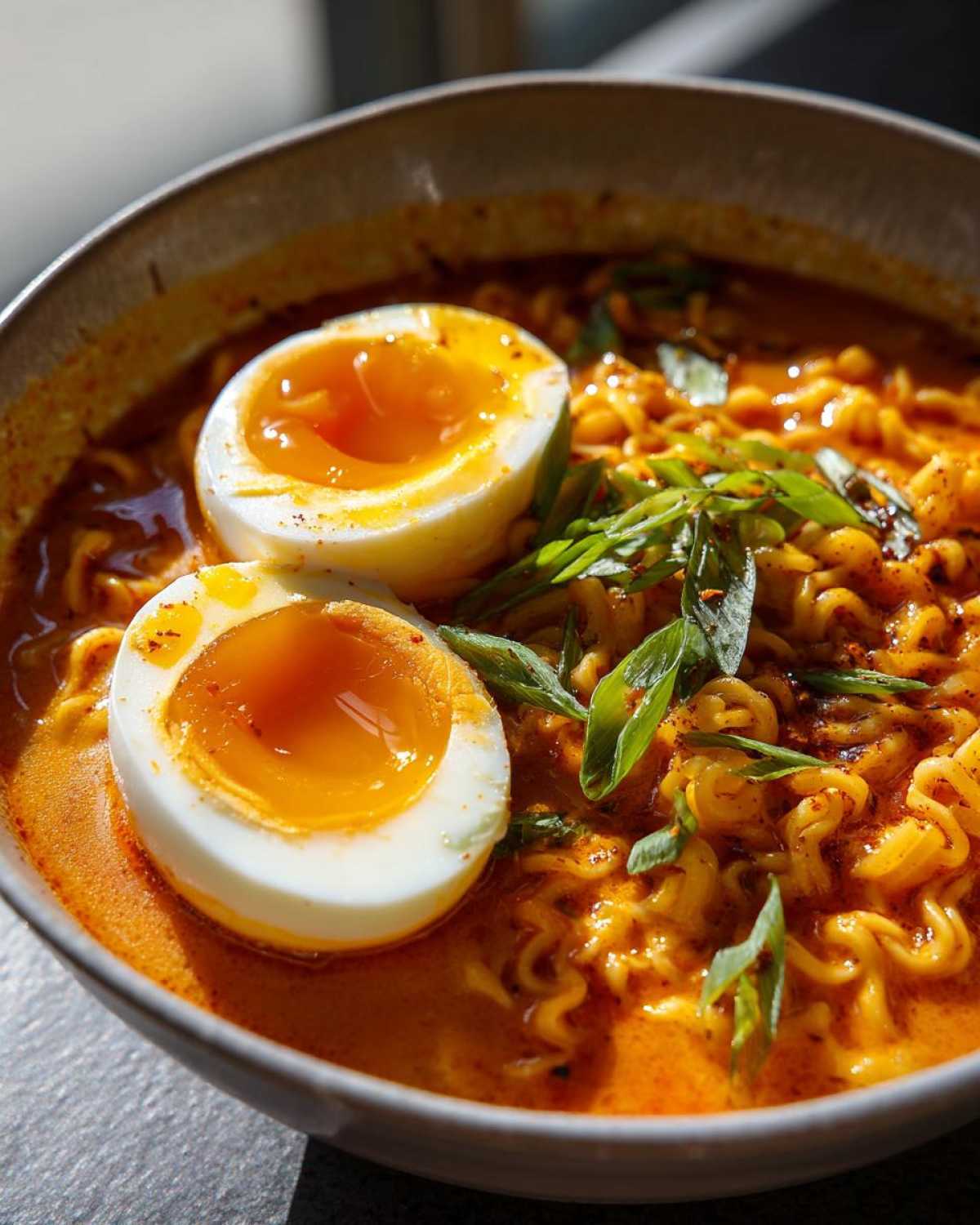
For this spicy bowl, here are my absolute must-haves:
- Menma (Seasoned Bamboo Shoots): These are salty, slightly crunchy, and soak up the broth beautifully without getting soggy too fast. They add that essential savory chew.
- Butter: Yes, butter! Seriously, just a small pat of high-quality unsalted butter melting into the piping hot spicy broth adds an incredible richness that cuts through the sharpness of the miso. It makes the whole bowl feel luxurious.
- Bean Sprouts: A small handful, quickly blanched or added raw right before serving. They give a cool, fresh snap that clears your palate between those spicy, deeply flavored sips. Don’t cook them long; they like to stay crisp!
Whatever you decide to load on top of your **Spicy Miso Ramen with Soft-Boiled Eggs**, remember that the key is balance. You want fresh elements, rich elements, and texture in every single spoonful.
Storage and Reheating Instructions for Spicy Miso Ramen with Soft-Boiled Eggs
Even though this **Spicy Miso Ramen with Soft-Boiled Eggs** is so good you’ll want to drink every last drop, sometimes life happens, and you can’t finish the whole batch. That’s totally fine! The good news is that the broth base actually tastes even better the next day once those complex miso flavors have had time to really meld together. But here’s the golden rule for storing ramen components: never keep the noodles and the broth together in the fridge!
Noodles left sitting in broth get unbelievably gummy and mushy—we want that perfect al dente chew, right? So, you need to separate everything before you tuck it away.
Storing the Broth Base
Pour your leftover spicy miso broth into an airtight container. It keeps really well in the refrigerator for about three to four days. If you happen to make a massive batch and want to freeze some, that works too! Freeze individual servings in sturdy containers, leaving about an inch of headspace at the top since liquids expand. If you’re freezing it, know that it’ll last for about a month, easy.
Handling Noodles and Eggs
Cook the noodles fresh every time you serve a bowl; don’t store them cooked! If you have leftover cooked noodles, you can rinse them quickly in cold water to stop the cooking, toss them with a tiny bit of sesame oil so they don’t stick together in a giant clump, and store them in a separate container for no more than a day. The Ajitama eggs? They are fantastic stored right in that marinade in the fridge. They will keep absorbing flavor, so they might get slightly darker and saltier the longer they sit, but they are safe and delicious for up to a week.
Reheating Everything for the Best Bowl
When you’re ready for round two of your amazing **Spicy Miso Ramen with Soft-Boiled Eggs**, you have to reheat the broth gently. Pour the broth into a saucepan and warm it over medium-low heat. You want it steaming hot, but again, **do not let it boil hard** because we don’t want to cook off any of that delicate miso flavor we worked so hard to develop.
Meanwhile, boil fresh water and cook your ramen noodles until they are perfectly done—timing this correctly means you get that fresh texture, not the sad, soggy stuff! Drain those noodles well, load them into your serving bowl, ladle over the piping hot broth, and top with a freshly sliced Ajitama egg and your favorite toppings. It’s like making it fresh all over again!
Frequently Asked Questions About Making Spicy Miso Ramen
When you’re diving into a recipe like this—the ultimate comfort food—you always have a few lingering questions! I’ve gathered the ones I always get asked about mastering that perfect **Spicy Miso Ramen with Soft-Boiled Eggs**, especially around substitutions and timings. Ask away, I’m happy to help you nail the flavor!
Can I make this Spicy Miso Ramen recipe vegetarian?
Absolutely, you totally can! The beauty of miso is that it’s naturally vegetarian, bringing a huge wallop of savory depth all on its own. For this recipe, all you need to do is swap out the chicken stock for a really good quality vegetable stock. That’s the main swap. Also, if you were planning on sautéing ground pork to boost the flavor (which is an option in the notes, right?), just skip that step for a cleaner, completely vegetarian bowl. Sometimes I’ll sauté some extra mushrooms instead—they give you that meaty texture and rich flavor back!
What is the best way to make Ajitama Egg marinade quickly?
Oh, I wish I could tell you they are perfect in 20 minutes, but they really need time for that color and saltiness to penetrate past the white and reach that amazing jammy yolk. The absolute, hand-on-heart best way is definitely overnight. I aim for at least 8 hours in the fridge. However, if you are having a sudden craving for **Ajitsuke Egg recipe homemade** magic, you need a minimum of two hours submerged in that marinade. If you’re really pressed for time, you can gently warm the marinade (don’t boil!) just before adding the eggs, which slightly helps speed up absorption, but the texture of the egg white can get a little chewier, so I prefer the cold soak method if I can manage it.
How do I adjust the spice level for my individual bowls?
This is so easy to customize! I call for 1 to 2 tablespoons of chili bean paste in the main broth because I like it kicking hard, but you might prefer less heat. If you’re nervous, start with just one teaspoon and let the broth simmer. When you ladle it into the bowls, that’s your control point!
Instead of adding more paste to the whole pot, I recommend serving a little bowl of chili oil or Sriracha on the side. That way, everyone can tailor the heat of their own **Spicy Ramen broth from scratch** bowl exactly how they love it. I even have a quick guide on making my favorite chili oil to toss with leftover noodles if you happen to have any!
Can I use dried ramen or spaghetti instead of fresh noodles?
Yes, you certainly *can*, especially if you’re in a pinch and can’t grab fresh ramen noodles for your **flavorful ramen recipes winter warmer** night! Dried noodles are totally fine, but you need to pay close attention to the boiling time—they usually take longer than fresh ones, sometimes 7 to 10 minutes. Just cook them until they are tender but still have a little chewiness left. The texture won’t be quite as springy as the fresh kind, but the glorious spicy miso broth makes up for it!
Estimated Nutritional Information for Spicy Miso Ramen with Soft-Boiled Eggs
When you’re making something rich and deeply flavorful like this **Spicy Miso Ramen with Soft-Boiled Eggs**, you know it’s going to be satisfying, but maybe you’re wondering about the numbers. I always run the ingredients through a calculator just to stay aware, and I want to be upfront about what you can expect in a single bowl.
Now, please remember that these figures are just estimates based on the recipe as written, especially using the standard stock and the four eggs. This is Option A, so you get a good picture of what’s coming your way regarding macronutrients. You’re getting a solid amount of protein from both the eggs and the broth!
Here’s the breakdown for one hearty serving of our **Spicy Miso Ramen with Soft-Boiled Eggs**:
- Calories: Around 550
- Protein: A fantastic 30 grams
- Carbohydrates: About 75 grams (most of this is from the noodles!)
- Fat: Approximately 18 grams
It’s a complete meal tucked into one bowl! If you find sodium is a bit high, remember that’s the miso working its magic, so next time you can always ease up slightly on the added soy sauce. It’s a wonderfully filling dish that tastes like a splurge but is actually quite balanced when made at home.
Share Your Homemade Spicy Miso Ramen with Soft-Boiled Eggs
Whew! You made it through the broth building, the egg marination, and the final assembly of your **Spicy Miso Ramen with Soft-Boiled Eggs**! I truly hope your kitchen smells like the best little noodle shop right now. I’m always so excited to hear how you adapted this absolute gem of a recipe.
This bowl is a keeper, and I’d love for you to tell me what you thought! Did you stick to the 6 minute 30 second egg timing, or did you go ultra-runny at 6 minutes flat? Did you skip the optional pork for a veggie version? Drop your thoughts, tweaks, and ingredient swaps down in the comments section below. Don’t forget to give the recipe a star rating so others know how much you loved it. Maybe you even used some of the techniques I mentioned elsewhere on the site, like checking out my ‘About Me’ page to see how I developed my love for these deep flavor profiles!
And hey, if you snapped a photo of your perfect ramen bowl—especially those glistening, sliced Ajitama eggs on top of that fiery miso—I want to see it! Tag me on social media so I can admire your handiwork. Happy slurping, everyone!
PrintSpicy Miso Ramen with Soft-Boiled Eggs
A detailed recipe for rich, spicy miso ramen broth and perfectly seasoned soft-boiled eggs (Ajitama).
- Prep Time: 20 min
- Cook Time: 25 min
- Total Time: 45 min (plus 4+ hours for egg marination)
- Yield: 4 servings
- Category: Dinner
- Method: Stovetop
- Cuisine: Japanese
- Diet: Low Fat
Ingredients
- 1 quart chicken or vegetable stock
- 4 tablespoons red miso paste
- 2 tablespoons white miso paste
- 1 tablespoon soy sauce
- 1 tablespoon mirin
- 1 teaspoon sesame oil
- 1 teaspoon grated fresh ginger
- 2 cloves garlic, minced
- 1-2 tablespoons chili bean paste (Tobanjan) or Gochujang, to taste
- 8 ounces fresh ramen noodles
- 4 large eggs
- 1/4 cup soy sauce for egg marinade
- 1/4 cup mirin for egg marinade
- 1 cup water for egg marinade
- Toppings: sliced green onions, corn kernels, nori strips, cooked ground pork (optional)
Instructions
- Prepare the Ajitama Eggs: Bring a small pot of water to a rolling boil. Gently lower the eggs into the boiling water. Cook for exactly 6 minutes and 30 seconds for a runny yolk. Immediately transfer the eggs to an ice bath to stop the cooking process. Peel carefully.
- Make the Egg Marinade: Combine 1/4 cup soy sauce, 1/4 cup mirin, and 1 cup water in a small container. Place the peeled eggs into the marinade, ensuring they are fully submerged. Refrigerate for at least 4 hours, or preferably overnight.
- Prepare the Broth Base: In a medium saucepan, heat the sesame oil over medium heat. Add the minced garlic and grated ginger. Sauté for 30 seconds until fragrant.
- Build Flavor: Stir in the chili bean paste (Tobanjan) and cook for one minute, stirring constantly.
- Combine Liquids: Pour in the chicken or vegetable stock. Bring the mixture to a simmer.
- Incorporate Miso: In a small bowl, whisk the red miso paste, white miso paste, soy sauce, and mirin with about 1/2 cup of the hot broth until smooth. This prevents the miso from clumping.
- Finish Broth: Pour the smooth miso mixture back into the saucepan. Heat gently, but do not allow the broth to boil after adding the miso, as this can diminish its flavor. Taste and adjust spice or saltiness as needed. Keep warm.
- Cook Noodles: Cook the ramen noodles according to package directions until just tender (al dente). Drain well.
- Assemble Bowls: Divide the cooked noodles among four large bowls. Ladle the hot spicy miso broth over the noodles.
- Serve: Slice the marinated eggs in half lengthwise. Place two egg halves on top of each bowl. Garnish with sliced green onions, corn, and nori strips.
Notes
- For a richer broth, you can sauté 4 ounces of ground pork with the garlic and ginger before adding the stock.
- If you prefer a less spicy broth, start with one teaspoon of chili paste and add more to your individual bowl later.
- The quality of your miso paste significantly impacts the final flavor of the broth.
Nutrition
- Serving Size: 1 bowl
- Calories: 550
- Sugar: 12
- Sodium: 1800
- Fat: 18
- Saturated Fat: 4
- Unsaturated Fat: 14
- Trans Fat: 0
- Carbohydrates: 75
- Fiber: 5
- Protein: 30
- Cholesterol: 375