

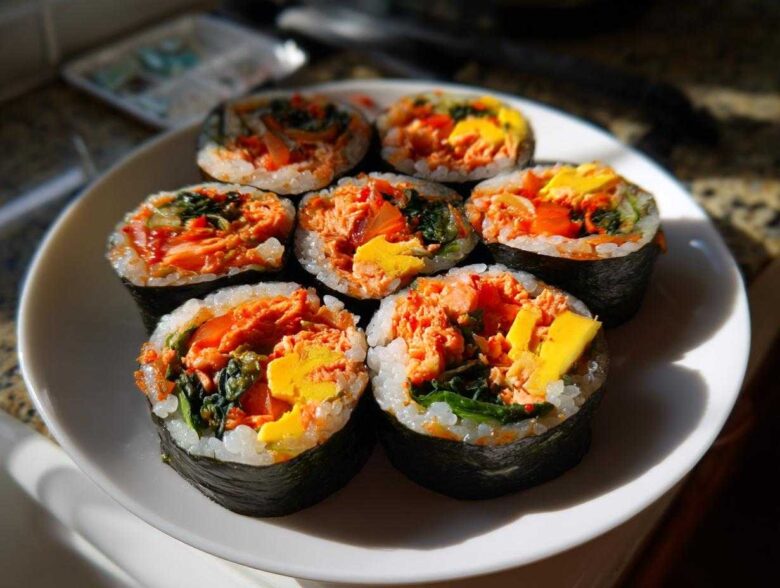
Okay, can we just talk for a second? Sometimes I get that intense craving for authentic Korean food, but I don’t want to trek out to the market. That’s when I turn to rolling up a batch of the absolute best **tuna kimbap** you will ever taste. Forget those dry versions you find in supermarket plastic boxes! My secret is a ridiculously creamy, perfectly spicy filling that gives these **Korean Rice Rolls** so much life.
Seriously, this recipe has become legendary in my house, especially when I whip up some **Spicy Tuna Rolls** for a last-minute **Quick Korean Lunch**. It’s truly my go-to comfort food, the way I bring amazing **Korean Street Food at Home**. Once you taste this filling, you’ll never go back, I promise!
I love that I can link out to some of the philosophy behind my kitchen here at Cookery Kings, but trust me, the real magic is in these layers of fresh flavor wrapped up tight.
Why This Spicy Tuna Kimbap Recipe Works Best
I know what you’re thinking: “Another kimbap recipe?” But trust me, friend, mine is different. This isn’t just *a* **tuna kimbap** recipe; it’s the blueprint for the **Best Tuna Kimbap** you’ll ever make at home. It’s fast, too, which means you can score an amazing **Quick Korean Lunch** without needing hours in the kitchen.
Here’s what separates my rolls from the rest:
- The texture is unbelievably creamy—never dry or crumbly.
- That perfect little kick of heat elevates the whole experience.
- You can genuinely get these done faster than ordering takeout!
Achieving the Perfect Spicy Mayo Tuna Filling
The secret sauce, literally, is the filling. We hit that sweet spot between savory and spicy by using Gochujang, but the ratio is everything. You need enough mayonnaise to make it luxurious, but not so much that it oozes out when you roll. My biggest tip for flawless **Spicy Tuna Rolls**? Drain that canned tuna until you think it can’t give another drop—then drain it one more time. Excess water is the enemy of a creamy, tightly packed **tuna kimbap** filling!
Gathering Ingredients for Your Tuna Kimbap
Before we get into the rolling fun—and that’s crucial, friend—we need to talk about ingredients. Getting this right is 90% of the battle, especially when making proper **tuna kimbap**. You can’t cheat on the rice quality here; it needs that perfectly sticky short-grain structure to hold everything together.
We’re generally prepping four components: the rice base, the powerhouse spicy filling, the supporting egg, and of course, the beautiful crunch of the vegetables. Make sure you have good quality Gim—the seaweed sheets made specifically for kimbap, not sheets for sushi!
Rice Preparation for Authentic Korean Rice Rolls
Don’t just use plain steamed rice, please! The rice needs flavor! Take your warm short-grain rice and mix in just a tablespoon of sesame oil and half a teaspoon of salt. This quick seasoning is non-negotiable for **Korean Rice Rolls**. It infuses the entire **tuna kimbap** with that classic nutty aroma that makes all the difference.
Preparing the Fresh Vegetable Fillings
The vegetables need that little bit of prep work so they taste vibrant and not watery inside your rolls. You’ll quickly blanch your spinach, squeeze out every drop of water, and lightly sauté those carrots until they are just tender-crisp. And remember to seed your cucumber before slicing it into sticks! This attention to detail is what makes your **Fresh Seaweed Rolls** hold up so beautifully.
Step-by-Step Chamchi Kimbap Tutorial
Alright, here comes the fun part! It might seem intimidating if you’ve never made **Homemade Gimbap** before, but I promise, this **Chamchi Kimbap Tutorial** makes it simple enough for **Kimbap for Beginners**. We’re building layers of flavor, and the key is keeping things neat. Once you get the rhythm down, you’ll be flying through these **tuna kimbap** rolls! Don’t stress about perfection on the first try; they will still taste amazing.
The Art of Spreading Rice on Gim
Lay your seaweed sheet (Gim) down on your bamboo mat. Now, take about three-quarters of a cup of that perfectly seasoned rice and spread it right over the top. Here’s the essential rule: leave a clean 1-inch border at the very top edge of the sheet—the edge furthest from you. This empty space is vital because it’s what we use to seal the whole **tuna kimbap** roll shut later on. Don’t press too hard; we want that rice spread evenly, not mashed!
Securing the Roll: Tips for Tight Homemade Gimbap
Time for the magic! Start rolling right from the bottom edge—the edge closest to you—rolling it up and over the fillings tightly, using your fingers to keep everything tucked in. Give it a gentle squeeze to make sure those fillings are compact. This is how you get those beautiful, tight **Homemade Gimbap** pieces that don’t fall apart when you pick them up. Once you get near the top edge, moisten that empty 1-inch border with just a tiny bit of water. Press that wet edge down onto the roll to seal it completely. Seriously, if you need help making contact with us about your technique, check out our contact page!
Tips for Success When Making Tuna Kimbap
So you’ve mastered the roll—that’s fantastic! But I have a few little secrets I want to share to make your **tuna kimbap** game top-tier. To really speed things up and nail that fresh texture, prepping the fillings the day before is an absolute lifesaver. When everything is prepped, you can get a whole batch rolled faster than any **15 Minute Asian Recipe** promises!
Also, don’t skip lightly toasting the seaweed sheet! I just hold the Gim over a very low gas flame for maybe two seconds per side until it gets just a tiny bit crispier. It doesn’t change the flavor much, but it makes the sheet much more pliable and less likely to tear when you’re rolling those heavy fillings.
Lastly, remember: use that Spicy Tuna filling sparingly. Too much filling means you won’t be able to seal the wrap properly. We want **yummy kimbap rolls**, not giant, leaky logs!
Storage and Reheating Instructions for Yummy Kimbap Rolls
Listen, if you can help it, finish every piece of this **tuna kimbap** right after you slice it. Seriously, it’s the best when the rice is still slightly warm from the rolling process and the seaweed has that slightest little crispness. These **yummy kimbap rolls** are designed to be eaten immediately!
If you have leftovers (lucky you!), you need to be careful about storing them. I really, really advise against putting them in the fridge. Cold air makes the rice go hard and chewy, and nobody wants that! If you must save them, wrap them tightly in plastic wrap or put them in an airtight container at cool room temperature for just a few hours. If they do end up chilled, try letting them sit out for 15 minutes before eating. I’d never microwave these; the seaweed goes instantly soggy. Just stick to fresh!
Serving Suggestions for Asian Picnic Food
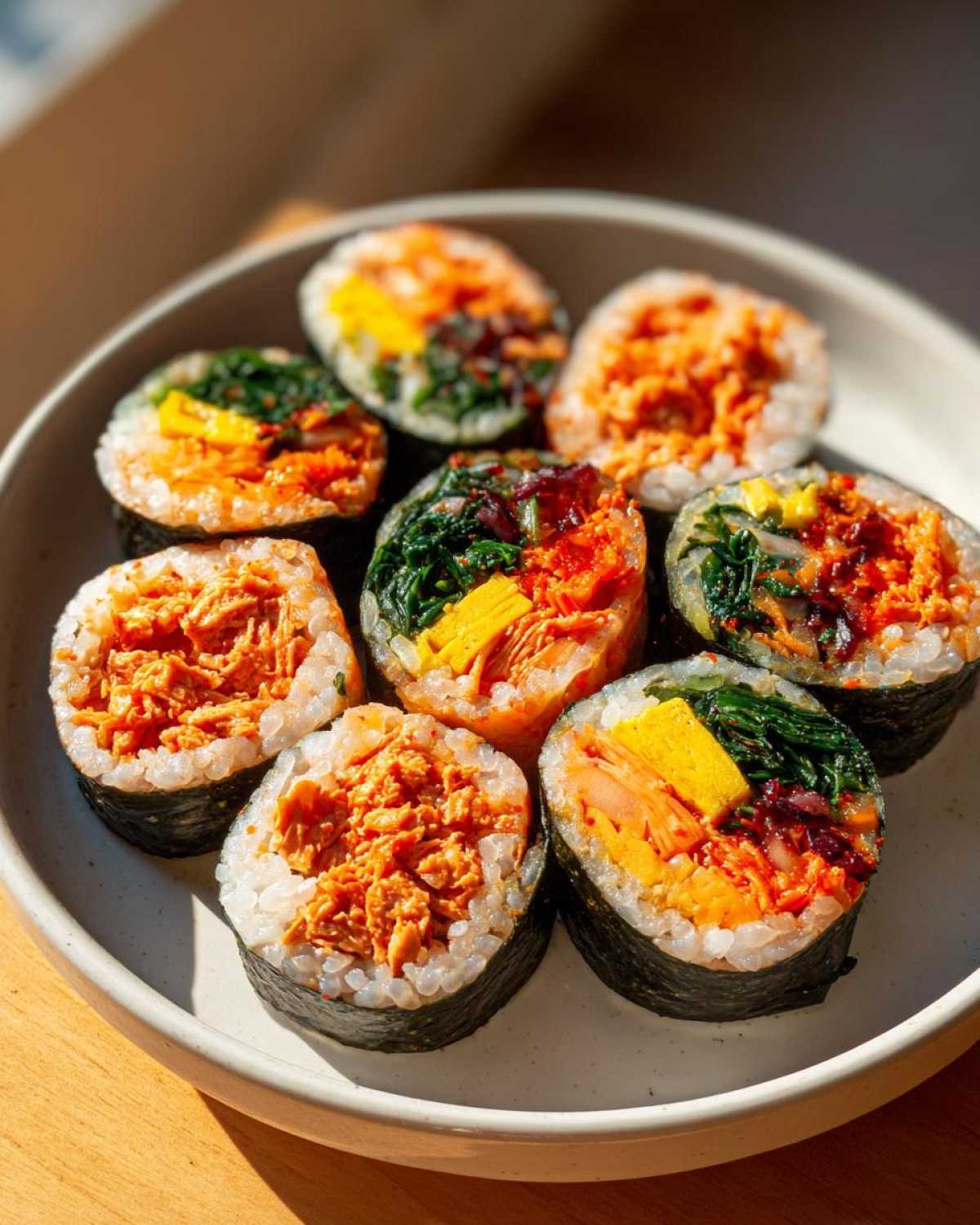
Once you’ve mastered that beautiful roll, the next step is deciding how to present it! Since this **tuna kimbap** is often destined for lunchboxes or big gatherings, think of it as prime **Asian Picnic Food**. I typically slice the rolls into neat, uniform pieces and arrange them standing up on a platter so you can really see those colorful fillings stacked up. People will definitely want to know what’s inside!
Because we made these with a spicy kick, they pair wonderfully with something cool. A little side dish of plain, lightly vinegared cucumber salad cuts right through that richness. A simple dipping sauce—maybe just a tiny bowl of soy sauce mixed with a splash of rice vinegar—is perfect for those who want an extra savory hit. They shine as **party finger foods** all on their own, though!
Frequently Asked Questions About Chamchi Kimbap
I totally get it—when trying a new recipe, you always have a few burning questions! I’ve gathered up the ones I hear most often about making **tuna kimbap** at home so you can feel completely confident when you sit down to roll. Remember, these **savory snack rolls** are surprisingly versatile!
For instance, people always ask about making these lighter. Yes, you absolutely can shape this into a **Healthy Tuna Roll**! Just load up on those vibrant vegetables—add more carrots and cucumber—and lean a little lighter on the mayo in the filling, maybe using half Greek yogurt for a tangy boost without all the fat.
Can I substitute the spicy mayo mixture in this tuna kimbap?
Oh, absolutely! If you’ve got little ones eating or just can’t handle the heat that day, swapping out the Gochujang is easy. You can turn this into a classic, non-spicy version by skipping the chili paste entirely. Just mix the drained tuna with the mayonnaise, a dash of sesame oil, and a tiny pinch of sugar for balance. Voila! Perfect mild **Korean Rice Rolls** every time.
What if you’re missing Gochujang? Try a teaspoon of sriracha mixed with a tiny splash of ketchup for a different kind of sweet heat, or even some finely minced kimchi juice (but skip the kimchi pieces unless you want texture!). The key is keeping the filling creamy and seasoned!
Estimated Nutritional Data for Tuna Kimbap
When you’re making something delicious like these **yummy kimbap rolls**, sometimes you wonder where everything fits in your day? I pulled together some rough estimates for you based on using standard pantry ingredients and the fillings listed above. It helps when you’re planning **lunchbox ideas Korean** style!
Keep in mind this data is just an estimate for one serving size—about eight slices of one roll. Your actual numbers might look a little different depending on how generous you are with that creamy tuna mixture! We always stress that flavor comes first, but numbers are good to know!
We rely on quality ingredients here, so always remember that this is our best guess and not a certified dietary breakdown. You can find more general sharing policies over here on our disclaimer page if you need more detail on how we approach nutritional estimates.
Share Your Homemade Gimbap Creations
I really want to see what you all come up with! There’s nothing better than seeing my favorite **tuna kimbap** recipe showing up in your kitchens. Once you finish rolling your **homemade gimbap**, snap a picture! Seriously, tag me when you post those gorgeous **vibrant vegetable rolls** online; I love seeing your presentation.
Don’t be shy about leaving feedback or asking questions down in the comments below—that’s how we all learn and improve! If you loved this recipe, a quick star rating really helps other readers find this guide to making the **best tuna kimbap** at home. Let’s keep spreading the love for great **make ahead finger foods**!
If you have any detailed policy questions about using our site or content, please check out our terms and conditions for further information.
Estimated Nutritional Data for Tuna Kimbap
When you’re making something delicious like these **yummy kimbap rolls**, sometimes you wonder where everything fits in your day? I pulled together some rough estimates for you based on using standard pantry ingredients and the fillings listed above. It helps when you’re planning **lunchbox ideas Korean** style!
Keep in mind this data is just an estimate for one serving size—about eight slices of one roll. Your actual numbers might look a little different depending on how generous you are with that creamy tuna mixture! We always stress that flavor comes first, but numbers are good to know!
We rely on quality ingredients here, so always remember that this is our best guess and not a certified dietary breakdown. You can find more general sharing policies over here on our privacy policy if you need more detail on how we approach nutritional estimates.
Share Your Homemade Gimbap Creations
I really want to see what you all come up with! There’s nothing better than seeing my favorite **tuna kimbap** recipe showing up in your kitchens. Once you finish rolling your **homemade gimbap**, snap a picture! Seriously, tag me when you post those gorgeous **vibrant vegetable rolls** online; I love seeing your presentation.
Don’t be shy about leaving feedback or asking questions down in the comments below—that’s how we all learn and improve! If you loved this recipe, a quick star rating really helps other readers find this guide to making the **best tuna kimbap** at home. Let’s keep spreading the love for great **make ahead finger foods**!
If you have any detailed policy questions about using our site or content, please check out our terms and conditions for further information.
PrintSpicy Tuna Kimbap (Chamchi Kimbap)
Make fresh, flavorful Spicy Tuna Kimbap at home. This recipe provides quick instructions for creamy and spicy tuna filling inside Korean rice rolls, perfect for lunch or snacks.
- Prep Time: 20 min
- Cook Time: 10 min
- Total Time: 30 min
- Yield: 4 servings
- Category: Lunch
- Method: Rolling
- Cuisine: Korean
- Diet: Vegetarian
Ingredients
- 4 sheets Gim (seaweed sheets for kimbap)
- 3 cups cooked short-grain rice
- 1 tablespoon sesame oil (for rice)
- 1/2 teaspoon salt (for rice)
- 1 (5 oz) can tuna, drained
- 3 tablespoons mayonnaise
- 1 tablespoon Gochujang (Korean chili paste)
- 1 teaspoon sugar
- 1/2 teaspoon sesame oil (for filling)
- 1/4 cup finely chopped pickled radish (danmuji)
- 1/2 cup shredded carrot, lightly sautéed
- 1/2 cup spinach, blanched and squeezed dry
- 1/2 cucumber, seeded and julienned
- 2 eggs, cooked into thin omelets and sliced
- Sesame seeds, for topping
Instructions
- Prepare the rice: Mix the warm cooked rice with 1 tablespoon sesame oil and 1/2 teaspoon salt. Set aside.
- Make the spicy tuna filling: In a bowl, combine the drained tuna, mayonnaise, Gochujang, sugar, and 1/2 teaspoon sesame oil. Mix until creamy.
- Prepare the vegetables and egg: Slice the cooked egg omelets, julienne the cucumber, and prepare the sautéed carrots and seasoned spinach.
- Assemble the kimbap: Lay one sheet of Gim on a bamboo rolling mat. Spread about 3/4 cup of the seasoned rice evenly over the Gim, leaving a 1-inch border at the top edge.
- Layer the fillings: Arrange thin lines of the spicy tuna filling, pickled radish, carrots, spinach, cucumber, and egg across the center of the rice.
- Roll the kimbap: Starting from the bottom edge, tightly roll the mat away from you, pressing gently to secure the ingredients. Moisten the top edge of the Gim with a little water to seal the roll.
- Slice and serve: Brush the outside of the finished roll lightly with sesame oil and sprinkle with sesame seeds. Slice the roll into bite-sized pieces.
Notes
- For an easier roll, lightly toast the seaweed sheets over a low flame before using.
- You can substitute the spicy filling with plain tuna mayo if you prefer a non-spicy version.
- Prepare all vegetable fillings in advance to speed up the rolling process.
Nutrition
- Serving Size: 1 roll (approx. 8 slices)
- Calories: 350
- Sugar: 4
- Sodium: 450
- Fat: 15
- Saturated Fat: 3
- Unsaturated Fat: 12
- Trans Fat: 0
- Carbohydrates: 40
- Fiber: 2
- Protein: 15
- Cholesterol: 80