

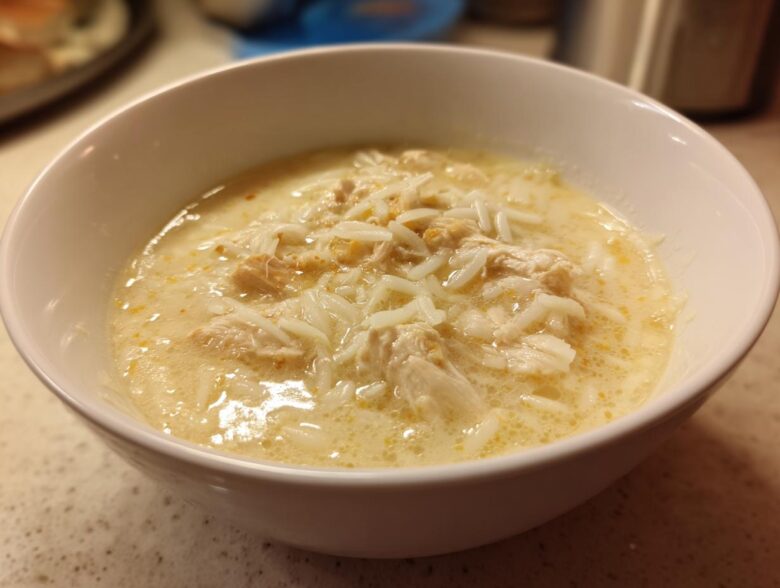
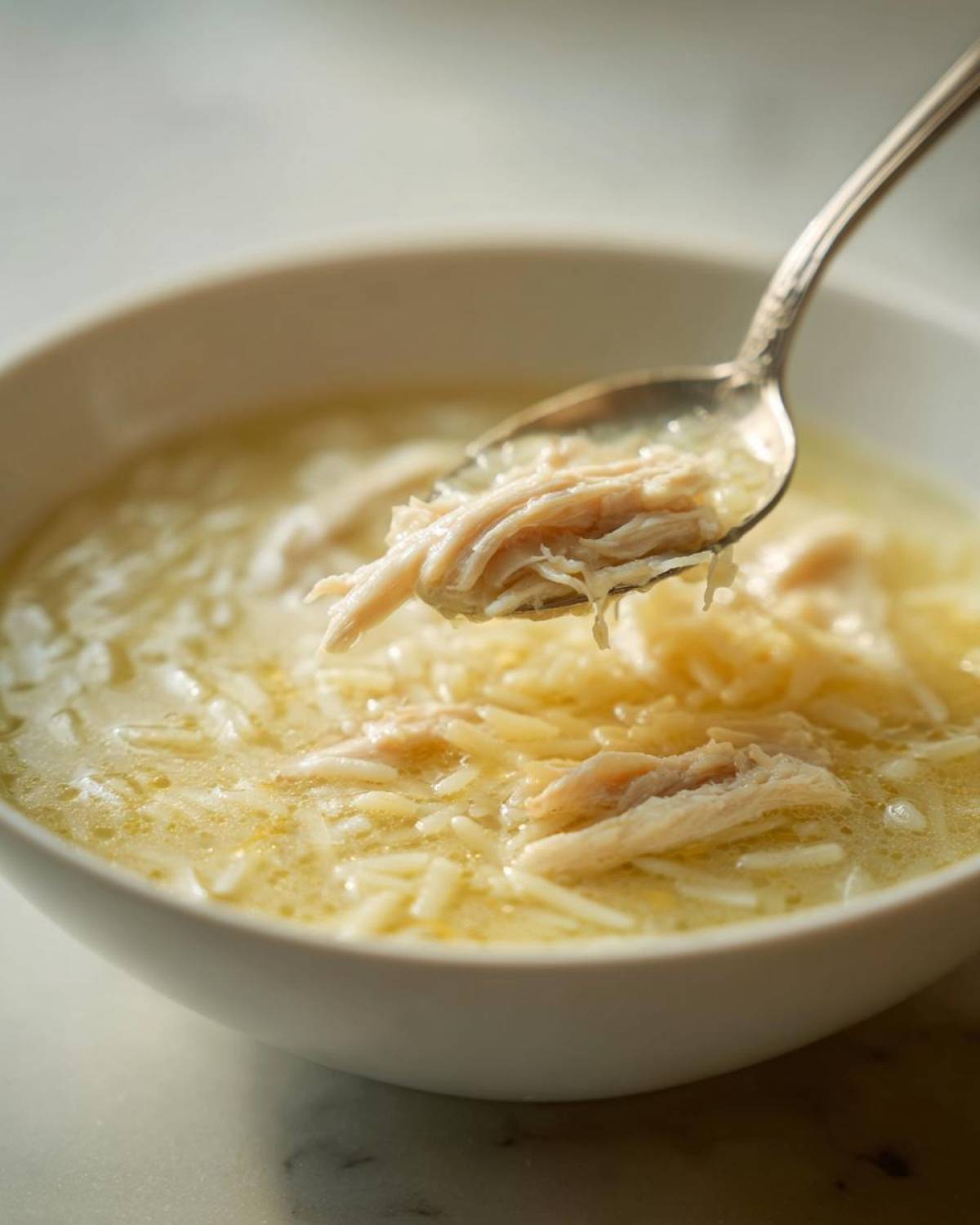
Oh, honey, when the weather turns tricky or you just need a hug in a bowl, nothing, and I mean *nothing*, beats a bowl of cozy soup. For me, the ultimate comfort food has always been true Greek Lemon Chicken Soup. It’s sunshine in a saucepan! Now, I know what you’re thinking—Avgolemono sauce! It sounds intimidating, right? People are terrified of scrambling the eggs. Well, trust me because I’ve made this traditional recipe fifty times, and I’ve perfected the gentle technique. This guide will walk you through achieving that rich, impossibly creamy, non-curdled finish every single time. Seriously, get ready for the best bowl of Avgolemono you’ve ever tasted.
Why This Greek Lemon Chicken Soup Recipe Works (Experience & Trust)
So, why is my method for Greek Lemon Chicken Soup the one you should really stick to? It’s all about respecting the broth and treating those eggs like the delicate treasures they are! I’ve learned over the years that if you start thin, you end up watery, and if you rush the eggs, you end up with scrambled bits instead of that gorgeous sheen.
We focus on two major things: a deep foundation of flavor and a tempering process that simply can’t fail. If you follow these two areas strictly, you’ll have a perfect bowl every time.
The Secret to a Flavorful Clear Chicken Broth
Listen, if you dump everything into plain water, your soup is going to taste… plain. The broth has to sing! I highly recommend using homemade stock if you can swing it. If you’re using store-bought, look for the low-sodium kind so you can control the salt later. I almost always use chicken I’ve already cooked, maybe leftover from a slow cooker recipe like this one. Shredding that pre-cooked meat ensures the chicken melts beautifully into the soup without overcooking it while you finish the rest of the steps.
Achieving the Velvety Lemon Egg Soup Texture
This is where we earn our stripes! The goal isn’t just soup; we want a velvety lemon egg soup that coats your spoon. That beautiful, creamy texture comes entirely from the tempering—it’s an essential shock treatment for the eggs. We slowly introduce hot liquid to gently wake them up before they ever meet the main pot. It takes an extra two minutes, but it means no curdling, guaranteed. It’s the single most important step for true Avgolemono!
Gathering Ingredients for Authentic Avgolemono Recipe
Alright, let’s get our mise en place ready for this Authentic Avgolemono recipe. Having everything measured out is non-negotiable here because once we start tempering, things move fast! Don’t substitute anything major here; the balance of lemon to egg is what locks in that wonderful, tangy flavor we want.
Chicken and Grain Components
For the body of the soup, we keep it simple. You’ll need about a cup of chicken that’s already been cooked and nicely shredded—the finer the better. And for the starch, stick with orzo pasta. It gives the soup a lovely texture; about half a cup should do the trick based on six cups of broth. Rice works in a pinch, but orzo is the true classic choice.
The Essential Lemon-Egg Base
This is the heart of the soup! Grab three large eggs. My best advice? Make sure those eggs are at room temperature before you even start whisking. Seriously, warm eggs incorporate much better than cold ones right out of the fridge. Then, you absolutely must have half a cup of freshly squeezed lemon juice. I mean it—freshly squeezed! That bottled stuff is just too sharp and will throw the flavor off completely.
Step-by-Step Instructions for Greek Lemon Chicken Soup
Now we get to the fun, slightly nerve-wracking part! Cooking the Greek Lemon Chicken Soup base is easy, but the magic happens when we bring in the Avgolemono. I want you to move slowly here, especially regarding temperature. Rushing this part is how you end up with a disappointing pot of lemony scrambled eggs, and we are absolutely not doing that today! We need creamy, velvety results.
Preparing the Broth and Grain Base
First things first, get your six cups of flavorful chicken broth simmering gently over medium heat. Once it’s steaming (but not raging!), toss in your half-cup of orzo or rice. Let that cook down until your grain is perfectly tender—usually about 8 to 10 minutes if you are using orzo. When the grains are soft, add your cup of shredded cooked chicken. Just stir that in and let it warm all the way through for about two minutes. Okay, this is huge: Drop the heat right down to the lowest possible setting, or even turn it off briefly while you get the egg mixture ready. The broth absolutely cannot boil during the next steps! If you want to prep your chicken ahead of time using a machine, check out my favorite method for quick pulled chicken.
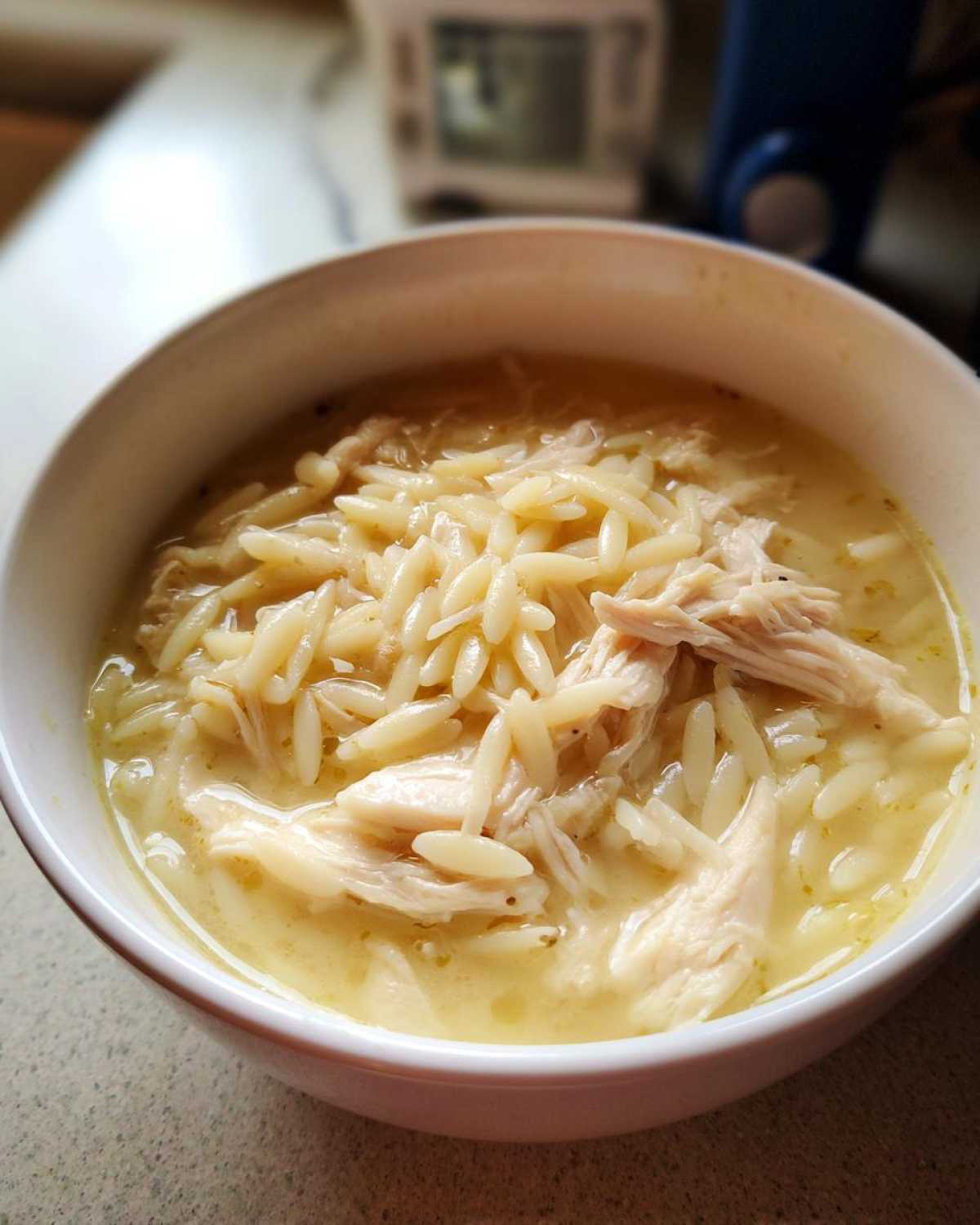
Mastering How to Make Avgolemono Without Scrambling
This is the make-or-break move for how to make Avgolemono without scrambling! In a separate bowl, whisk those three room-temperature eggs until they are seriously frothy and light—you want air in there. Then, while whisking the eggs nonstop, start ladling in about a cup of that hot broth, one spoonful at a time. You are slowly raising the egg temperature, which cooks them just enough without actually scrambling them. Once you’ve added about a full cup of broth this way, stir in your half-cup of lemon juice quickly.
Finishing and Thickening the Traditional Greek Chicken Soup
Once your egg mixture is tempered, slowly pour the whole thing back into the main soup pot in a thin, steady stream. You must keep stirring the soup constantly as you pour! We stir gently for about two or three minutes over that barely-there low heat. Watch it transform! The soup will become opaque and thicken slightly. And I cannot stress this enough: after the egg mixture goes in, the pot must not boil or your Traditional Greek chicken soup will curdle on you. Once it’s thickened to your liking, taste it and add the salt and pepper. Take it off the heat, and you are done!
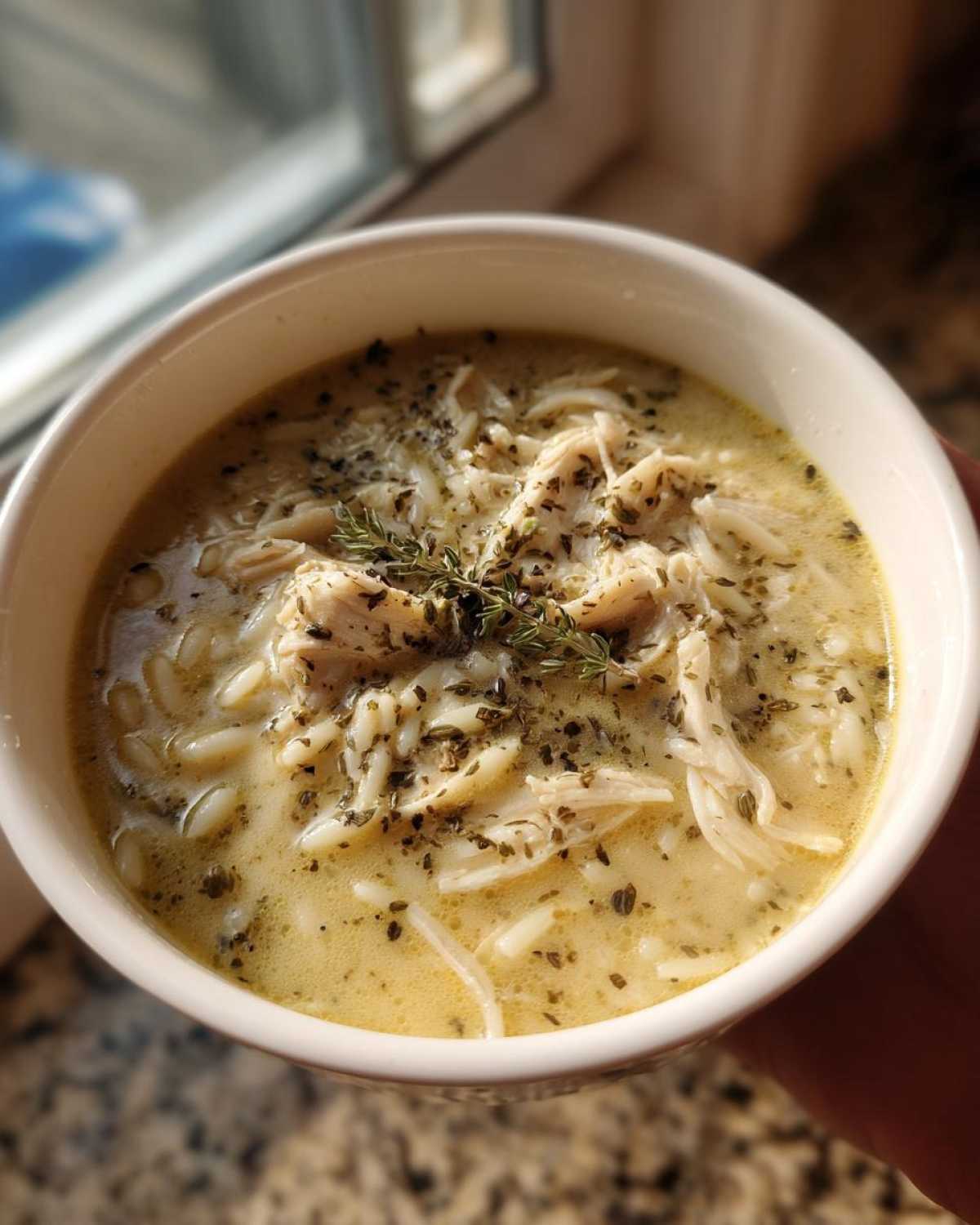
Tips for Success with Your Creamy Greek Soup Tutorial
Okay, you’ve made your beautiful creamy Greek soup tutorial masterpiece! Now, let’s talk about what happens after you’ve eaten two bowls and put the leftovers away. Avgolemono is famously temperamental when it cools down; it sets up nearly like soft custard in the fridge. Don’t panic if it looks too thick the next day!
This means you nailed the egg ratios, which is fantastic, but you need a little reviving trick for the leftovers. My note section got a little shout-out on this: if it’s too firm, just reheat it gently on the stovetop and stir in a little bit of piping hot water or extra broth. You need to thin it out; remember, it won’t thicken up again as it cools the second time around.
Adjusting Consistency Post-Cooking
Think about the desired texture you want when you serve it. If you like a really loose, almost clear soup, you might want to hold back on that final half-cup of broth when settling down initially, or just add more hot water later. If you prefer that thick, satisfying coating, then you’re good to go! But seriously, if leftovers look like solid gelatin the next morning, don’t cry—just whisk in hot liquid until it loosens back up beautifully. It’s totally salvageable!
Variations on the Greek Lemon Chicken Soup
While I stand by the classic orzo recipe I gave you above—it’s truly the benchmark for Greek Lemon Chicken Soup—I totally understand the need to mix things up sometimes! Life happens, pantries look different, and maybe you just ran out of orzo mid-week. Don’t worry; this soup is incredibly flexible, which is why it’s such a staple in Greek homes.
The crucial element remains the Avgolemono sauce itself. As long as you nail that tempering technique, you can swap out the filling ingredients and it will still taste authentic and wonderful!
Choosing Your Grain for this Easy Lemon Chicken Soup Recipe
If you are looking for an easy lemon chicken soup recipe but don’t have orzo, rice is a perfectly acceptable substitution. However, I want you to know what you are getting into! Orzo is shaped like grain but cooks more like a tiny pasta, so it releases a bit more starch into the broth, helping create a slightly silkier mouthfeel overall. Rice, especially short-grain rice like Arborio (though not necessary to buy that fancy kind!), tends to absorb more liquid and can make the soup feel denser as it cools.
If you prefer a slightly lighter, less starchy texture, go with rice. If you want that hug-in-a-bowl quality, orzo wins out every time. Also, if you find yourself with leftover rotisserie chicken—or maybe you made some amazing quick shredded chicken tacos last night (I love this method for speeding them up!)—just shred that up and toss it in at the end! It saves so much time.
Storage and Reheating Instructions for Your Greek Lemon Chicken Soup
So, you made too much—lucky you! Storing leftovers of your beloved Greek Lemon Chicken Soup is where you need to be a little careful. Because we achieved that perfect, velvety texture with the egg and lemon base, this soup is going to look dramatically different the next day. When it chills, that beautiful sauce tightens up, and it can look almost gelatinous or like it’s starting to separate. Please, don’t throw it out! That’s totally normal for this kind of soup.
The secret to leftovers is to *never* try to reheat the soup boiling hot. If you blast it on high heat, those delicate proteins in the egg are going to spring back and clump up, leaving you with bits of cooked egg floating in thin, watery broth. No one wants that sad experience after all the careful tempering!
When you reheat your leftover soup, put it in a pot over medium-low heat. Stir it constantly, slowly bringing it up to just steaming temperature. If it looks too thick—and it probably will at first—I want you to whisk in small splashes of fresh, hot water or extra chicken broth until you get back to that creamy consistency you loved when it was first served. It’s honestly shocking how well it bounces back with just a little thinning and gentle warmth!
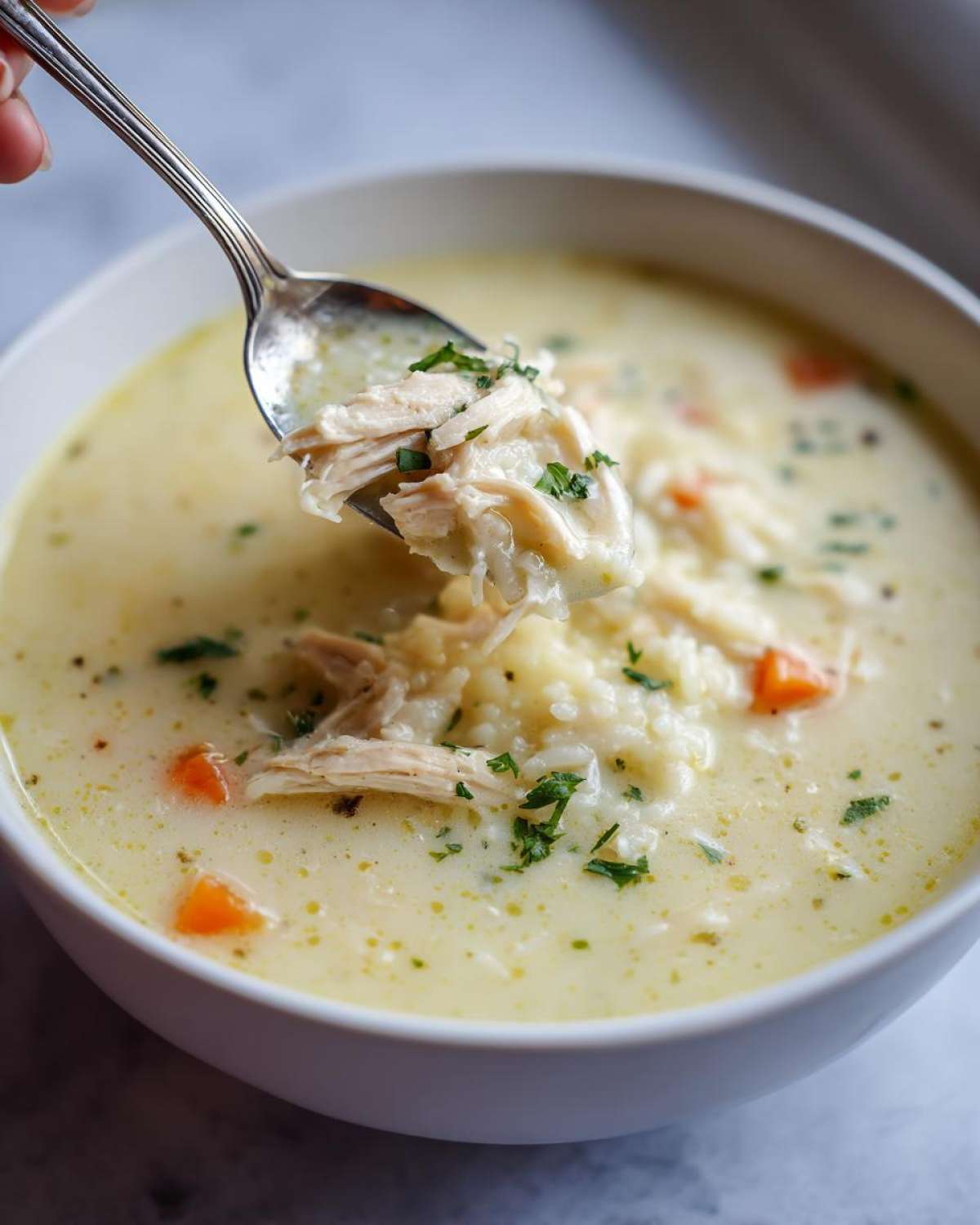
Serving Suggestions for Homemade Greek Comfort Food
You’ve done the hard work making this beautiful, tangy soup, and now it’s time to make it a real meal! This Homemade Greek comfort food is so vibrant, it actually pairs wonderfully with simple, crusty sides that can soak up that lovely broth. You don’t need anything complicated, honestly—the soup is the star of the show.
When I serve this, I always keep the sides neutral so the lemon and egg flavor can shine. A fantastic accompaniment is some hearty, crusty bread for dipping. Forget fancy garlic bread; you want something that really soaks up the broth. I often make a batch of simple homemade flatbread, kind of like a lighter naan, for that perfect scoop. You can find my favorite quick recipe for that right here if you’re feeling ambitious!
If you want to keep it authentically Greek and simple, you can’t go wrong with a big slab of good quality feta cheese dusted with a little dried oregano served on the side. The salty tang of the feta is just heaven with the bright acid of the lemon. Also, a side of lightly dressed baby spinach, maybe just drizzled with olive oil and a tiny pinch of salt, adds a nice fresh green component that cuts through the richness of the chicken and egg perfectly. Enjoy sitting down with it; this soup begs you to slow down and savor every spoonful!
Frequently Asked Questions About Avgolemono Sauce Technique
I tried to keep this recipe fuss-free, but I know you might still have questions swirling around, especially concerning that tricky egg part! It’s funny how people worry about this Authentic Avgolemono sauce technique, but once you see how easy the tempering is, you’ll never be scared again. Here are some of the things I hear most often when friends try making Greek Lemon Chicken Soup for the first time.
Can I use chicken broth concentrate instead of stock?
Oh, you *can*, but please don’t if you can avoid it! Remember how I emphasized getting a flavorful broth? Concentrates often have a harsher, almost metallic taste compared to good quality stock or homemade broth. If you absolutely must use concentrate, mix it a little weaker than the package suggests, and then taste it before you even start cooking the orzo. The flavor of the broth is the whole backbone of the soup, so we want clean, rich flavor, not something that tastes like a bouillon cube dissolved too strongly.
What is the correct temperature for the broth when tempering eggs?
This is the golden question related to the Authentic Avgolemono sauce technique! The broth needs to be hot—hot enough that it’s steaming strongly and has been gently simmering—but it absolutely cannot be boiling aggressively when you ladle it into the eggs. Think of it this way: you want it hot enough to introduce heat gradually, not hot enough to immediately cook and scramble the egg proteins. If you see large, rolling bubbles, turn the heat off completely for a solid minute before you start ladling even one spoonful into your egg mixture. Slow and steady wins this race!
Can I use dried herbs instead of fresh parsley?
Yes, you can definitely use dried herbs like a pinch of dried dill or oregano for garnish instead of fresh parsley, but I highly suggest fresh parsley if you have it. Parsley adds a little pop of clean color and a brighter, fresher flavor right at the end. If you use dried herbs for the garnish, you only need about a third of the amount you’d use for fresh—say, half a teaspoon sprinkled lightly. Remember, dried herbs are much more potent, and we are just using this for visual flair, not deep flavor infusion!
Nutritional Estimates for This Greek Lemon Chicken Soup
Now, I know we’re making this beautiful, homemade comfort food, and honestly, when I’m cooking like this, I’m not usually counting every single calorie! But for those of you who track things or are just curious about what’s in this powerhouse of a soup, I pulled the general estimates for you. It’s surprisingly light for how creamy it feels, which is the magic of that Avgolemono technique—we get richness without heavy cream!
Keep in mind that these numbers are just estimates based on the ingredient list I shared. If you use low-sodium broth versus a very high-sodium one, or if you use leaner chicken breast versus darker meat, these values will shift a bit. This is just a starting point so you know roughly where you stand!
- Serving Size: About 1.5 cups
- Calories: Around 320 per serving
- Protein: This soup is packed with it—about 30g!
- Fat: Pretty reasonable, sitting around 10g total fat.
- Carbohydrates: Mostly coming from the orzo or rice, about 28g.
- Sodium: This one is higher, around 650mg, because broth is naturally salty. That’s why I always tell you to taste before adding extra salt!
See? That’s a fantastic punch of protein for a soup! It’s the perfect Simple weekday Greek dinner that leaves you feeling satisfied but not weighed down. Enjoy knowing you’re eating something truly nourishing!
PrintAuthentic Greek Lemon Chicken Soup (Avgolemono)

Follow these steps to make traditional Avgolemono, a creamy Greek lemon and egg soup, ensuring the sauce does not curdle.
- Prep Time: 10 min
- Cook Time: 20 min
- Total Time: 30 min
- Yield: 4 servings
- Category: Soup
- Method: Stovetop
- Cuisine: Greek
- Diet: Low Fat
Ingredients
- 6 cups flavorful chicken broth
- 1 cup cooked, shredded chicken
- 1/2 cup orzo pasta or rice
- 3 large eggs
- 1/2 cup fresh lemon juice (about 3 lemons)
- Salt and freshly ground black pepper to taste
- 2 tablespoons chopped fresh parsley for garnish (optional)
Instructions
- In a large pot, bring the chicken broth to a simmer over medium heat.
- Add the orzo or rice to the simmering broth. Cook according to package directions until tender, usually 8 to 10 minutes for orzo.
- Add the shredded cooked chicken to the soup and heat through for about 2 minutes. Reduce the heat to the lowest setting; the broth must not boil during the next steps.
- In a separate medium bowl, whisk the eggs vigorously until they are light and frothy.
- Slowly whisk the fresh lemon juice into the eggs until fully combined.
- Temper the egg mixture: Ladle about 1 cup of the hot broth from the soup pot, one spoonful at a time, into the egg-lemon mixture while whisking constantly and quickly. This raises the temperature of the eggs without cooking them.
- Once tempered, slowly pour the entire egg-lemon mixture back into the soup pot in a thin, steady stream, stirring the soup continuously with a wooden spoon or whisk.
- Continue stirring gently over very low heat for 2 to 3 minutes. Do not allow the soup to boil after adding the egg mixture, or the sauce will curdle. The soup will thicken slightly and become opaque.
- Taste and adjust seasoning with salt and pepper.
- Serve immediately, garnished with fresh parsley if desired.
Notes
- For the richest broth, use homemade chicken stock instead of store-bought.
- If the soup seems too thick after cooling slightly, stir in a little hot water or extra broth to reach your preferred consistency.
- Use room temperature eggs for the best tempering results.
Nutrition
- Serving Size: 1.5 cups
- Calories: 320
- Sugar: 3
- Sodium: 650
- Fat: 10
- Saturated Fat: 3
- Unsaturated Fat: 7
- Trans Fat: 0
- Carbohydrates: 28
- Fiber: 1
- Protein: 30
- Cholesterol: 180