

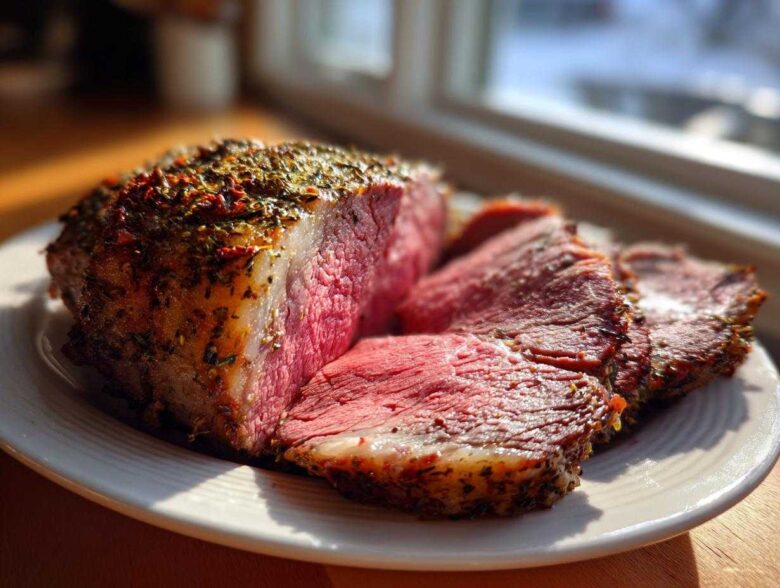
Oh, the holiday table! It absolutely demands a show-stopping centerpiece, doesn’t it? And nothing says ‘spectacular meal’ quite like a perfectly pink, succulent roast beef. Forget the stress—we are conquering the roast beast today with my go-to: the Fool-Proof Garlic Herb Crusted Prime Rib Roast. Trust me on this one; after years of perfecting holiday roasts, I can guarantee this method delivers a perfectly cooked prime rib every time. This isn’t just any prime rib recipe; it’s the blueprint for getting that amazing crust while keeping the center unbelievably juicy. Get ready to impress everyone!
Why This is the Best Prime Rib Recipe for Your Holiday Centerpiece Meal
Look, there are a million ways people tell you how to cook prime rib, and honestly, most of them leave you sweating over the oven wondering if disaster is imminent. Not this one! This is truly the Best Prime Rib Recipe because it takes the guesswork out of the equation, making it incredibly Easy Prime Rib for a busy host. We focus on two things: phenomenal, savory flavor and a Medium Rare Roast guarantee.
When people rave about getting a Perfectly Cooked Prime Rib, it’s because they’ve mastered the temperature control we use here. It’s designed specifically to deliver that deep, rich color and the most tender center you’ve ever sliced for a Christmas Roast Beef.
Achieving a Perfectly Cooked Prime Rib Every Time
The secret weapon we use in this prime rib recipe is the two-stage temperature blast. We hit it super high—500 degrees!—just to shock the outside of the meat. That initial searing creates a gorgeous, slightly crispy exterior bark. Then, we back it right off to 325 degrees for the long, slow finish. This method is the best way to ensure an incredibly Juicy Prime Rib Roast because the fast hit of heat seals everything in before the slow cook gently brings the inside to perfection.
The Flavor Secret: Garlic Butter Herb Crusted Prime Rib
I mean, who doesn’t want a blast of flavor right on the surface? The combination of softened butter infused with six cloves of garlic and dried herbs creates this fragrant, savory blanket over the roast. As it melts and cooks, it creates the most magical, almost caramelized crust. The whole house smells like a five-star steakhouse! It’s that Garlic Butter Prime Rib application that turns a good roast into a true Herb Crusted Prime Rib masterpiece.
Gathering Ingredients for Your Prime Rib Recipe
Okay, listen up: the quality of your ingredients is non-negotiable when you’re making something this important for a Holiday Centerpiece Meal. You can’t skimp here! This prime rib recipe is mostly about letting incredible beef shine, but that garlic butter rub needs to be absolutely perfect. Don’t just throw random spices at it; we need precision!
Here’s exactly what you need lined up on the counter before you even think about taking that roast out of the fridge. Make sure your butter is truly softened—not melted, just soft enough to indent easily. That’s a game-changer for getting an even rub.
- 1 (5-7 pound) bone-in prime rib roast (we call this the standing rib roast recipe cut!)
- 2 tablespoons coarse salt (don’t try to use fine table salt here, coarse is best!)
- 1 tablespoon black pepper
- 1 tablespoon dried rosemary
- 1 tablespoon dried thyme
- 6 cloves garlic, minced (and I mean minced! No big chunks allowed.)
- 4 tablespoons unsalted butter, softened
- 2 tablespoons olive oil
Selecting the Best Standing Rib Roast Recipe Cut
This is where you have a quick choice to make, and frankly, it impacts how delicious your Tender Roast Beef turns out. While you *can* get a boneless roast, I absolutely insist on getting a bone in prime rib. Why? The bones act like natural insulation, slowing down the cooking around the edges and helping to keep the roast juicier. It also helps stabilize the roast when you put it on the rack!
For a typical gathering, aim for 5 to 7 pounds. That usually gives you about two ribs, which is the perfect size for most ovens and ensures you get that crucial center section cooked just right for your medium rare roast. Ask your butcher for a ‘prime rib roast’ or a ‘standing rib roast’—they know exactly what you mean. Tell them you’re aiming for a showstopper!
Simple Prime Rib Instructions for Your Oven Roasted Prime Rib
Now that we have our ingredients ready, this is where we turn everything into magic. I promise you, this is the most Easy Prime Rib method you’ll ever try! The key to making this a Fool Proof Roast Recipe is sticking to the timeline, especially the part where you let the meat relax out of the fridge. You can’t rush greatness, folks.
Preparing the Roast for the Prime Rib Recipe
First things first: take that beautiful roast out of the cold about two to three hours before you plan to cook it. This tempering process is vital for an even cook! While that’s happening, go ahead and preheat your oven to a screaming hot 500 degrees Fahrenheit. Next, mix up that glorious paste—the softened butter, the minced garlic, and those dried herbs go right into a bowl and get mashed together.
Once the oven is hot, you need to prep the meat. Seriously, grab paper towels and pat that entire roast completely dry. No moisture allowed on the surface, okay? Moisture creates steam, and we want a crust! After drying, rub it all over with olive oil, then season it aggressively with salt and pepper. Finally, take your garlic herb paste and spread that lovely mixture evenly over the entire thing like you’re icing a cake. Place it fat-side up on a rack in your roasting pan, and we are ready for the blast-off! Don’t forget to check out our Terms and Conditions to understand how we approach recipes.
The Two-Temperature Cooking Method for Medium Rare Roast
Step one of cooking is 15 minutes right at 500 degrees Fahrenheit. Don’t peek! After those 15 minutes, you need to drop the temperature down immediately to 325 degrees Fahrenheit. And here’s the important part: don’t open the oven door when you change the temp; just adjust the dial! You keep roasting at 325 degrees until your meat thermometer hits exactly 125 degrees Fahrenheit in the very thickest part—make sure you’re avoiding the bone!
This typically takes about 13 to 15 minutes for every pound after that initial 15-minute sear. Once you hit that 125°F mark, pull it out! That is the magic number for a perfect Medium Rare Roast. We are going to tent it loosely with foil now, but trust me, the next step is the most crucial for a truly Tender Roast Beef.
Crucial Resting Period for a Juicy Prime Rib Roast
Okay, if you think you’re done cooking once you pull that glorious roast out of the oven at 125 degrees, you’re making the biggest mistake almost everyone makes with a big roast! This step is why some people end up with a dry slab the next day, and some people get the most amazing, melt-in-your-mouth slices.
We are talking about resting time—and you absolutely cannot skip it if you want a truly Juicy Prime Rib Roast and beautifully Tender Roast Beef. Remember how we pulled it at 125°F? That’s intentional! The residual heat still trapped inside that massive cut of beef is doing extra work called carryover cooking.
If you start slicing right away, all that delicious juice—the very thing that makes this a prime rib recipe success—is going to run out onto your cutting board and down the drain. We need to let the muscle fibers relax! Tent it loosely with foil—don’t wrap it tight, or the crust will steam and get soggy—and walk away for a solid 20 minutes. Seriously, set a timer! That 20 minutes is what bumps your internal temp up safely to that perfect 130°F to 135°F range for a beautiful medium-rare finish. It transforms the texture completely!
Tips for Success When Making This Prime Rib Recipe
I always tell people that once you know the basic temperatures for this prime rib recipe, you hold the keys to the kingdom! This is what separates the anxious holiday cooks from the folks who look like they do this every single Sunday. Mastering this becomes second nature, which is why I call it a Fool Proof Roast Recipe—it just works if you respect the thermometer.
The single most important tool you need? A reliable instant-read meat thermometer. Seriously, don’t eyeball this. You need to know what’s going on deep inside that roast. If you try how to cook prime rib without one, you are just guessing. Stick that probe in the thickest spot, making sure to avoid touching that bone underneath, and trust the numbers. That’s the only way to ensure you get that perfectly tender result you’re aiming for.
Also, when it comes time to slice into your beautiful creation, remember the cardinal rule for all roast beef: always slice against the grain! This shortens the muscle fibers, which is what makes every single slice of your Tender Roast Beef feel incredibly soft in your mouth. If you slice with the grain, you end up with chewy bites, even if the temperature was perfect.
One final practical pointer I always follow—and this comes directly from my notes—is about that chilling time. If you’re worried about the timing of your dinner, remember that fresh herbs are always great, but if you want to swap out the dried ones in the rub for fresh herbs, just double the amount you use! That burst of fresh rosemary and thyme adds such a brightness to the crust.
Adjusting Doneness Levels for Your Perfect Prime Rib Recipe
While my heart belongs to a perfect Medium Rare Roast, I know not everyone in your crowd shares that vision! A roast is a wonderful thing because there’s plenty of edge meat for those who like it cooked a little more. It also means you can serve different preferences easily from the same roast, which is fantastic for a Holiday Centerpiece Meal.
Here’s the quick cheat sheet for pulling your roast when the internal temperature hits those specific marks. Remember, it will climb about 3 to 5 degrees while it rests, so pull it slightly early!
- For Rare: Pull it out of the oven when the thermometer reads 120 degrees Fahrenheit. It will settle around 125 degrees.
- For Medium Rare (My Favorite!): Pull it out when it hits 125 degrees Fahrenheit. It generally settles around 130–135 degrees.
- For Medium: Pull it out when it reads 135 degrees Fahrenheit. This will finish around 140–145 degrees.
Anything past Medium starts to dry out too much for this rich cut, in my personal opinion, so stick to these ranges for the best experience. If you think you might overshoot, pull it a little shy of the target temperature. You can always sneak it back into a warm oven for five minutes, but you can’t un-cook it!
For more general cooking advice and guidelines regarding our recipes, please review our Disclaimer.
Serving Suggestions: Prime Rib with Au Jus
Now that you’ve pulled off the near-impossible task of making a stunning prime rib recipe, you need things to put next to it! Even the most gorgeous roast needs some friends on the plate, right? Since our focus today was purely on achieving that perfect temperature and that crunchy, garlicky crust, we didn’t dive into a full Prime Rib with Au Jus recipe, but don’t panic! You don’t need a complicated sauce to enjoy this.
Making a quick pan sauce, or jus, is shockingly easy. When you take your roast out of the pan for resting, look at those browned bits stuck to the bottom—that’s pure flavor gold! Tilt the pan, pour off most of the fat, and then scrape those bits up with a wooden spoon while adding maybe a cup of beef broth or water to the hot pan. Let it bubble and reduce down for about five minutes. That’s it! You’ve got an instant, flavorful juice to drizzle over your slices.
If you want something more substantial, a creamy horseradish sauce is non-negotiable when serving a Christmas Roast Beef centerpiece like this. Just whisk together some prepared horseradish, sour cream (or crème fraîche if you’re feeling fancy!), a squeeze of lemon juice, and a pinch of salt. It cuts through the richness of the beef beautifully.
As for sides, keep it classic to let that perfectly roasted beef shine. Creamy mashed potatoes are a must—they are the perfect vessel for any of that pan jus we just whipped up! Roasted root vegetables, like carrots and parsnips tossed simply with a little olive oil and salt, bring some earthy sweetness that complements the herbs in our crust. And never, ever forget the green vegetable with a big meal; simple blanched green beans tossed with toasted almonds add needed texture and color to the plate. With this flavor combination, you’ll genuinely impress every guest!
Storage and Reheating Instructions for Leftover Prime Rib Recipe
Okay, let’s talk about the glorious aftermath! If you’ve made this epic prime rib recipe, chances are you have some incredible leftovers—because who only eats one serving of the Best Prime Rib Recipe? Having leftovers is the perfect gift, but you have to store and reheat them correctly, or all that perfect juiciness we worked so hard for disappears like magic.
The biggest mistake people make with leftover roast beef is zapping it too fast in the microwave. That’s an express ticket to dry, chewy meat that tastes sad. We want to treat this leftover beef gently, honoring the fact that it was a Perfectly Cooked Prime Rib just hours before!
For storage, slice off whatever you think you’ll eat in the next day or two, but keep the large, unsliced portions together as long as possible. Wrap the meat tightly—first in plastic wrap to keep the moisture in, and then ideally in foil or a zip-top bag. We want to keep as much air out as possible. Stored correctly in the fridge, this beef should be fantastic for about four days. If you need longer, freezing is your best friend!
How to Reheat Your Prime Rib Recipe Slices Safely
When it comes to reheating, slow and low is the only way to go if you want that texture to resemble what you just ate. Forget searing it quickly; that’s for steaks. For slices of roast, you have two excellent options to maintain that beautiful tenderness.
The absolute best method, which keeps the meat tender and gives you a little broth flavor, is the low-and-slow oven bath. Put your slices in a shallow baking dish. Add a little liquid to the bottom—maybe a splash of beef broth or even just water—just enough to cover the bottom of the dish, not drown the beef! Cover that dish tightly with foil. Place it in a 300-degree oven. Because this is a Simple Prime Rib Instruction for reheating, you don’t need to pull out the thermometer; just heat until it’s warm all the way through. It usually takes about 15 minutes total, depending on thickness.
If you’re only reheating a couple of small pieces and are in a huge rush, you can gently sear them in a skillet on medium-low heat, adding a tiny bit of butter or oil. But you have to watch it like a hawk! Only reheat until the outside just starts to look warm; stopping before the center heats up fully prevents drying.
Making Quick Leftover Prime Rib Sandwiches
Honestly, sometimes the best way to enjoy a Juicy Prime Rib Roast leftover is completely changing the presentation! Thinly sliced leftover beef makes the world’s best, most decadent sandwich. Thinly slice the chilled roast against the grain—it slices much better when cold—and pile it high on a crusty roll.
If you’re aiming for a French Dip style, use that simple pan jus we talked about earlier, warmed up, and serve that on the side for dipping. That little bit of moisture and the salty richness of the beef make for an incredible lunch the next day. See? Keeping this meal around for a few days is a blessing!
Frequently Asked Questions About This Prime Rib Recipe
I know when you’re tackling a big roast like this, you probably have a few things whirling around in your head. That’s perfectly normal! It’s a big meal, and you want it to be perfect. I’ve gathered up the questions I get asked most often about how to cook prime rib and this specific prime rib recipe so you can feel totally confident going into your cooking day.
Can I use a boneless roast instead of bone-in for this recipe?
Yes, you absolutely *can*, but you’ll need to make a slight adjustment. If you use a boneless roast, the cooking time is generally shorter because there is no insulating bone keeping the heat back. When I recommend this Easy Prime Rib method, the times listed are based on a bone-in cut. For a boneless roast of comparable weight, I’d pull it about 10 to 15 minutes sooner than the recipe suggests and start checking that internal temperature earlier. Remember, the bone is your friend for achieving that incredibly Tender Roast Beef texture throughout!
What if I don’t have a roasting rack for my pan?
If you don’t have a dedicated roasting rack, don’t sweat it! You don’t want the bottom of that gorgeous roast sitting directly in the rendered fat and juices; we need airflow all around it to develop that crust. The trick is to build your own little supports! You can use two or three thick, clean carrots or russet potatoes, cut into thick logs, and place them parallel in the pan. Lay the roast right on top of those vegetables. They act like perfect, edible supports! They’ll soften, and you can discard them or mash them into your side dishes later. It works perfectly for this Oven Roasted Prime Rib!
How far in advance can I mix up the Garlic Butter Herb rub?
That’s a great efficiency question, especially when you’re planning a big Holiday Centerpiece Meal. You can certainly make that Garlic Butter Prime Rib rub ahead of time! I mix mine up a day in advance, store it in a small, tightly sealed container in the fridge, and it seems to let the herbs really bloom overnight. Then, about an hour before you plan to rub the roast, take the butter mixture out along with the meat so it can soften up again to a nice paste consistency. Don’t try to rub a rock-hard cold butter mixture onto the roast, or you’ll tear the surface!
Do I really need to use 500 degrees Fahrenheit? It seems too hot!
I hear you, my friend! 500 degrees sounds scary for beef, but trust me, this is the secret to developing that amazing surface crust without overcooking the interior. Remember the process: we only use that high heat for a quick 15 minutes. It sets up the exterior so quickly that the interior barely registers the change before we drop the temperature down to 325 degrees for the gentle finish. It’s a two-part tango! Skipping that high-heat blast is what leads to pale, floppy crusts on many people’s attempts at a prime rib recipe.
If you have any other tricky questions as you prepare for your dinner, please feel free to reach out to us via our contact page!
Understanding the Nutrition of This Classic Beef Roast
When you’re making a gorgeous, show-stopping roast like this—a true centerpiece of a meal—you’re probably not super concerned with the calorie count, but I know some of you like to keep track! Since a Classic Beef Roast like this is rich, it does pack a punch, but remember, these numbers are just estimates based on the ingredients listed for a single 6-ounce portion, assuming no extra fats are added during the resting/slicing stage.
This delicious meal is naturally low in carbohydrates because, well, it’s beef and butter! It’s certainly not a low-fat meal, but as we know from our recipe notes, much of that lovely fat renders out during cooking, leaving behind that incredible flavor profile.
Here is a quick breakdown of the estimated nutritional content per serving in this prime rib recipe:
- Serving Size: 6 ounces cooked
- Calories: 450
- Protein: 40g
- Fat: 30g (with about 14g saturated fat)
- Carbohydrates: 0g
- Sugar: 0g
- Sodium: 450mg (This varies widely based on how much coarse salt you use on the exterior!)
Please keep in mind these are just baseline estimates, especially since the exact fat content of the beef cut changes wildly. If you roast it perfectly and trim some of the exterior fat before serving, those numbers will shift downward! These figures do not account for any side dishes or the Prime Rib with Au Jus you might add at the table.
We always strive for transparency. For our full guidelines on how nutritional information is calculated across our site, please review our Privacy Policy, which outlines our data sourcing practices.
Share Your Impress Guests Dinner Success
That’s it! You have successfully navigated the Best Prime Rib Recipe out there and turned a traditionally intimidating meal into something manageable because you followed the simple steps for this Oven Roasted Prime Rib. Seriously, take a moment and pat yourself on the back!
Now, I want to see it! When you finish slicing that perfectly cooked roast, snap a picture of your beautiful centerpiece spread.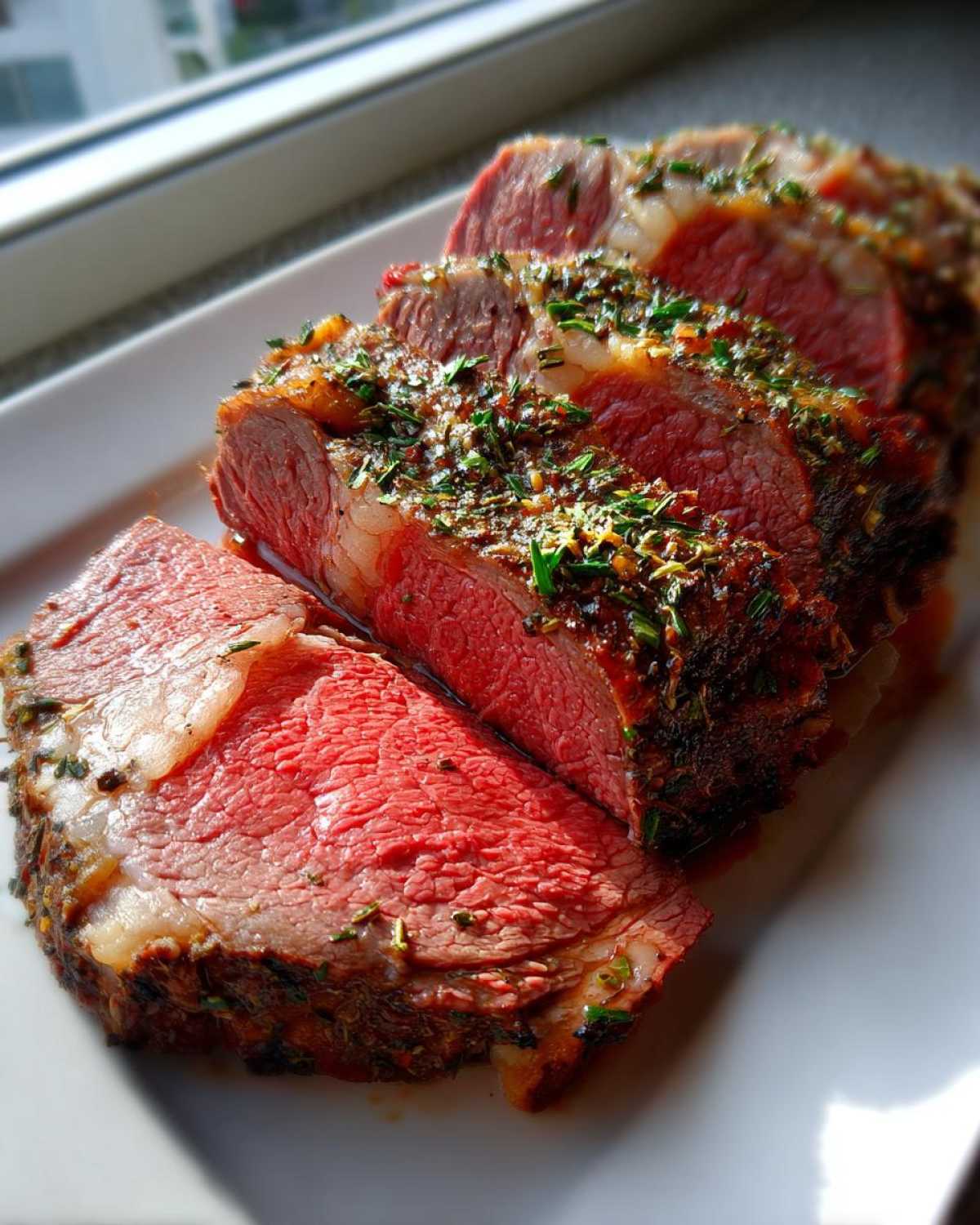 I absolutely love seeing your successes when you try my favorite family methods. Don’t forget to come back here and let me know how it went!
If you followed the steps exactly, I expect nothing less than the highest praise! Please leave a solid 5 stars if you loved the flavor and the guaranteed juiciness we achieved. Knowing that this prime rib recipe helped you create an incredible Impress Guests Dinner is the reason I share these secrets!
For details on how we manage user comments and submissions, please see our Cookie Policy.
Understanding the Nutrition of This Classic Beef Roast
When you’re making a gorgeous, show-stopping roast like this—a true centerpiece of a meal—you’re probably not super concerned with the calorie count, but I know some of you like to keep track! Since a Classic Beef Roast like this is rich, it does pack a punch, but remember, these numbers are just estimates based on the ingredients listed for a single 6-ounce portion, assuming no extra fats are added during the resting/slicing stage.
This delicious meal is naturally low in carbohydrates because, well, it’s beef and butter! It’s certainly not a low-fat meal, but as we know from our recipe notes, much of that lovely fat renders out during cooking, leaving behind that incredible flavor profile.
Here is a quick breakdown of the estimated nutritional content per serving in this prime rib recipe:
- Serving Size: 6 ounces cooked
- Calories: 450
- Protein: 40g
- Fat: 30g (with about 14g saturated fat)
- Carbohydrates: 0g
- Sugar: 0g
- Sodium: 450mg (This varies widely based on how much coarse salt you use on the exterior!)
Please keep in mind these are just baseline estimates, especially since the exact fat content of the beef cut changes wildly. If you roast it perfectly and trim some of the exterior fat before serving, those numbers will shift downward! These figures do not account for any side dishes or the Prime Rib with Au Jus you might add at the table.
We always strive for transparency. For our full guidelines on how nutritional information is calculated across our site, please review our Privacy Policy, which outlines our data sourcing practices.
Share Your Impress Guests Dinner Success
That’s it! You have successfully navigated the prime rib recipe out there and turned a traditionally intimidating meal into something manageable because you followed the simple steps for this Oven Roasted Prime Rib. Seriously, take a moment and pat yourself on the back!
Now, I want to see it! When you finish slicing that perfectly cooked roast, snap a picture of your beautiful centerpiece spread. I absolutely love seeing your successes when you try my favorite family methods. Don’t forget to come back here and let me know how it went!
If you followed the steps exactly, I expect nothing less than the highest praise! Please leave a solid 5 stars if you loved the flavor and the guaranteed juiciness we achieved. Knowing that this prime rib recipe helped you create an incredible Impress Guests Dinner is the reason I share these secrets!
For details on how we manage user comments and submissions, please see our Cookie Policy.
PrintFool-Proof Garlic Herb Crusted Prime Rib Roast
Follow these simple steps to cook a juicy and tender prime rib roast with a flavorful garlic herb crust using the standard oven method.
- Prep Time: 20 min
- Cook Time: 2 hours 30 min
- Total Time: 2 hours 50 min
- Yield: 6-8 servings
- Category: Main Course
- Method: Oven Roasting
- Cuisine: American
- Diet: Low Fat
Ingredients
- 1 (5-7 pound) bone-in prime rib roast (standing rib roast)
- 2 tablespoons coarse salt
- 1 tablespoon black pepper
- 1 tablespoon dried rosemary
- 1 tablespoon dried thyme
- 6 cloves garlic, minced
- 4 tablespoons unsalted butter, softened
- 2 tablespoons olive oil
Instructions
- Remove the prime rib from the refrigerator 2 to 3 hours before cooking to allow it to come closer to room temperature.
- Preheat your oven to 500 degrees Fahrenheit.
- In a small bowl, combine the softened butter, minced garlic, rosemary, and thyme. Mix until you have a uniform paste.
- Pat the entire roast dry with paper towels.
- Rub the roast all over with olive oil, then season generously with salt and pepper.
- Spread the garlic herb butter mixture evenly over the entire surface of the roast.
- Place the roast, fat-side up, in a roasting pan fitted with a rack.
- Roast at 500 degrees Fahrenheit for 15 minutes.
- Reduce the oven temperature to 325 degrees Fahrenheit without opening the door. Continue roasting until an internal meat thermometer inserted into the thickest part of the roast (avoiding bone) reads 125 degrees Fahrenheit for medium-rare. This usually takes about 13-15 minutes per pound after the initial high-heat blast.
- Remove the roast from the oven when it reaches 125 degrees Fahrenheit. Tent it loosely with aluminum foil.
- Let the roast rest for at least 20 minutes before slicing. The internal temperature will rise to about 130-135 degrees Fahrenheit (medium-rare).
- Slice against the grain and serve immediately.
Notes
- For a bone-in roast, resting is crucial for even cooking and juiciness. Do not skip the resting period.
- If you prefer a different doneness, aim for 120 degrees Fahrenheit for rare, or 135 degrees Fahrenheit for medium.
- You can substitute fresh herbs for dried herbs, using double the amount listed.
Nutrition
- Serving Size: 6 ounces cooked
- Calories: 450
- Sugar: 0
- Sodium: 450
- Fat: 30
- Saturated Fat: 14
- Unsaturated Fat: 16
- Trans Fat: 0
- Carbohydrates: 0
- Fiber: 0
- Protein: 40
- Cholesterol: 140